Showing posts with label Game Theory. Show all posts

Tuesday, May 21, 2013

The Thieves' Guilds of Minaria

The poor thief has been the subject of many debates and contentions since his incipient introduction in Supplement I: Greyhawk. The most common complaint falls upon the low starting ability of the thief class. It is true, with most special abilities starting at 10% to 15% chance of success, the thief can hardly feel "special," but is instead discouraged from risking his neck on his dubious skill set. In fact, these scores only improve to an even 50% somewhere around 7th level in most editions of Dungeons & Dragons, when the thief's fighter and magic-user compatriots are well on their way to obtaining the defining features of those classes. The other common grievance is that the thief class is either unnecessary or even inimical to a proper Dungeons & Dragons play experience. When the thief was introduced to Original Dungeons & Dragons, he largely co-opted and made exclusive certain adventuring abilities that all dungeon-delvers had previously shared. Common skills such as climbing, trap-finding and lock-picking were suddenly the sole prerogative of the doughty thief, who seemingly had no other function in the game than to encompass all of the competencies once enjoyed by the original adventurers. Instead of stealing treasure, thieves had stolen adventuring proficiency from the other characters.

Feeling the acute loss of fundamental dungeoneering capabilities, some referees qualified these "new" thief skills with the superlative: as Robert Fisher suggests, perhaps all classes can move quietly, but only thieves can move utterly silently. Yet, this approach does not address basic skills like lock-picking or trap-finding—talents that adventurers previously benefited from but were now bereft of. It also did not confront the relatively low chances of success of novice thieves, which rendered their skills prohibitively futile. Other house rules diminished the great difficulty of these dice rolls by granting significant bonuses for easier challenges—a rusted lock or a crude trap door, perhaps. This latter method only solved the clumsy low-level thief by effectively ignoring the rulebook, creating a balanced skill progression where a thief always faced challenges relative to his skill and therefore had comparable chances of success regardless of level (perhaps the very antithesis of early Dungeons & Dragons).

So what is to be done about these dual problems—the loss of common adventuring abilities from other characters and the relatively ineffective ability of the low-level thief? In Minaria, thieves are a vital part of the party, and any party that enters the dungeon without at least one or two in tow is in severe danger. Of course, any character has the same ability to explore the tricks and traps of the mythic underworld—I listen to their descriptions, look at their character sheet and then let them try their luck on a single polyhedral die (perhaps 3 in 8, or 5 in 12, or 2 in 6 and so on). I will even let the player pick her favorite lucky die and then adjudicate the odds for that die type. This approach demands that the referee give a clear description of the terrain and the player gives a clear description of her action, but this action is open to any and all characters (thieves included). However, if the players cannot figure out the trap by asking questions, or if they get a close guess but botch the roll, only the thief has a second layer of defense. Here, the thief's training and skill competency kicks in, and after failing the earlier attempt the thief can make a free, back-up saving roll on the Thieves' Abilities table. These bonus odds are on top of the regular effort, and are a second chance that can rescue the party regardless of whether they have figured out the trap. Played a different way, the party can skip the initial roleplaying and just have the thief roll the ability check. If this is successful, the trap is automatically described and bypassed and the adventure continues without pause. If this fails, the party must take a closer look at the trap and roleplay their attempt to manually disarm it.

At later levels, when thief skills become very high, it is likely the party will increasingly rely on the latter method—making initial recourse to the thief skill to see if the roleplay element can be dispensed with and more exciting parts of the dungeon can be accessed more quickly. At earlier levels, however, the party will enjoy the grittiness of dealing with traps and tricks more directly. Still, all characters should have a chance to open locks, remove traps, pick pockets, move silently, climb sheer surfaces and hide in shadows, at least when they describe a reasonable strategy and have character scores to support it. When the dice turn against such dungeon-delvers, however, thieves have a second chance to catch their fall. Sometimes, the narrated attempt will be unreasonable, and the referee will simply have to say No. Even when such practical constraints limit normal classes, though, thieves should still get their chance to snatch victory from defeat. By allowing thief skills to operate like an extra safety net for dashing heroics, thief characters are encouraged, not discouraged, from using their abilities.

Thursday, May 16, 2013

The Money-Changers of Minaria

Dealing with coin has always been one of the most utilitarian exercises in any Dungeons & Dragons campaign. It is a necessary evil that all referees and players engage in to translate conquest into capital. It is also one of the facets of the game that most stretches the imagination and suspension of disbelief, raising thorny questions like "why should all coins have a constant universal value across the entire expanse of the Known World?", "why are coins always evenly divisible into lesser or greater coinages?" or "why should these ancient coins from the dungeon still have currency back in the town?" The implication is that the fantasy setting has achieved what took Europe to the last years of the 20th century to figure out—a stable, universal currency system.

Of course, there are many different ways that game designers have tried to complicate the picture. Medieval fantasy markets might be tempered by inflation tables, availability charts or conversion rates. A referee might declare that each kingdom has its own coin mint and may not accept coinage from opposing lands. Applying any of these methods in an actual campaign quickly proves both highly complex and ultimately ineffective. It misses the point, after all. We are still dealing with the unholy triumvirate: Copper, Silver and Gold pieces. (Or is it the gruesome five: Copper, Silver, Electrum, Gold and Platinum?) No matter what additional layer of complexity you add to your campaign economy, you are still dealing with the universal basic building blocks of wealth, which convert dungeon triumphs to points of abstracted "cash" or "wealth."

In Minaria, everything works a little differently. You don't delve into the earth to plumb it for copper pieces and gold coins. Instead, you emerge (battered and shaken) with 1,350 coins from the lost Cisterian empire. Or perhaps you return from the Bugbear lair with the Duke's own personal treasure—some 560 shiny pieces of lucre. Here we find no generic points of wealth, but coinage with a story attached to it. As the greater part of Minarian society operates on barter, the heroes will need to find a buyer for their precious take, which is to say that the coins themselves do not necessarily hold inherent value as currency. Inn-keepers and armourers can do little with such moneys as they rarely take payments in specie, and flashing strange coinage around would likely raise the immediate and unwanted attention of the local Duke or Baron. Rather, the protagonists are well-advised to seek a local money-changer; someone who will buy the storied cache in exchange for credit in the local town, city or region. Once the heroes have successfully laundered their fortune, they will have full financing for their extravagant lifestyle and material acquisitions. For example, the players return with 800 tarnished silver coins of southern Kushite origin. After some negotiating, the major money-lender in the city agrees to purchase half of them for 220gp in credit, good throughout the province. This credit advance is probably in the form of some local currency (or perhaps a standing tab, or even an endorsed cheque)—a detail that is given a considerable amount of handwavium to gloss over the trivialities. Importantly, however, this credit does not carry over into different regions, meaning the protagonists would be wise to only sell what they need to of their hard-won treasure.

What does this actually do differently than the traditional copper piece, silver piece and gold piece system? Firstly, it introduces a level of mystery when the treasure chest is opened and the gleaming treasure trove is seen for the first time. Secondly, it further requires a little haggling when it comes time to pawn the riches off (which allows more referee control and even future adventures, if the party decides to sell the coins at a neighboring kingdom instead of locally). Thirdly, it gives each treasure a story of how it got there (and certainly the Baron will demand his coins back after the party recovers them from the sunken wreck). Finally, it ties wealth to the locale, without requiring the referee to adumbrate an entire global economy to explain why.

Tuesday, May 7, 2013

The Border Fortress

After a grueling finals and end to a long semester, I am slowly reemerging in a Boston reformed by summer leaves and flowers. The transformation seemed to happen over night, with flowering trees blooming to fill the parks and pathways. As a reward to treat myself for a difficult year of study, I decided to conspicuously indulge in this:

Outer packaging of the 1988 Mighty Fortress set.

Now, I have heard everything from accolades praising the 1988 edition of Warhammer Siege to bitter complains about complexity. Certainly, no one claims it is a simple game—it is designed as a full expansion of the original Warhammer Fantasy Battle rules and features both the complete freedom of game mechanics for every imaginable situation as well as the extensive book keeping that this would require. With all of the detail, even though most of it is optional and modular, one can be forgiven for missing things, and I suspect that Warhammer Siege is a game you learn as you play: an experience that gets better with time.

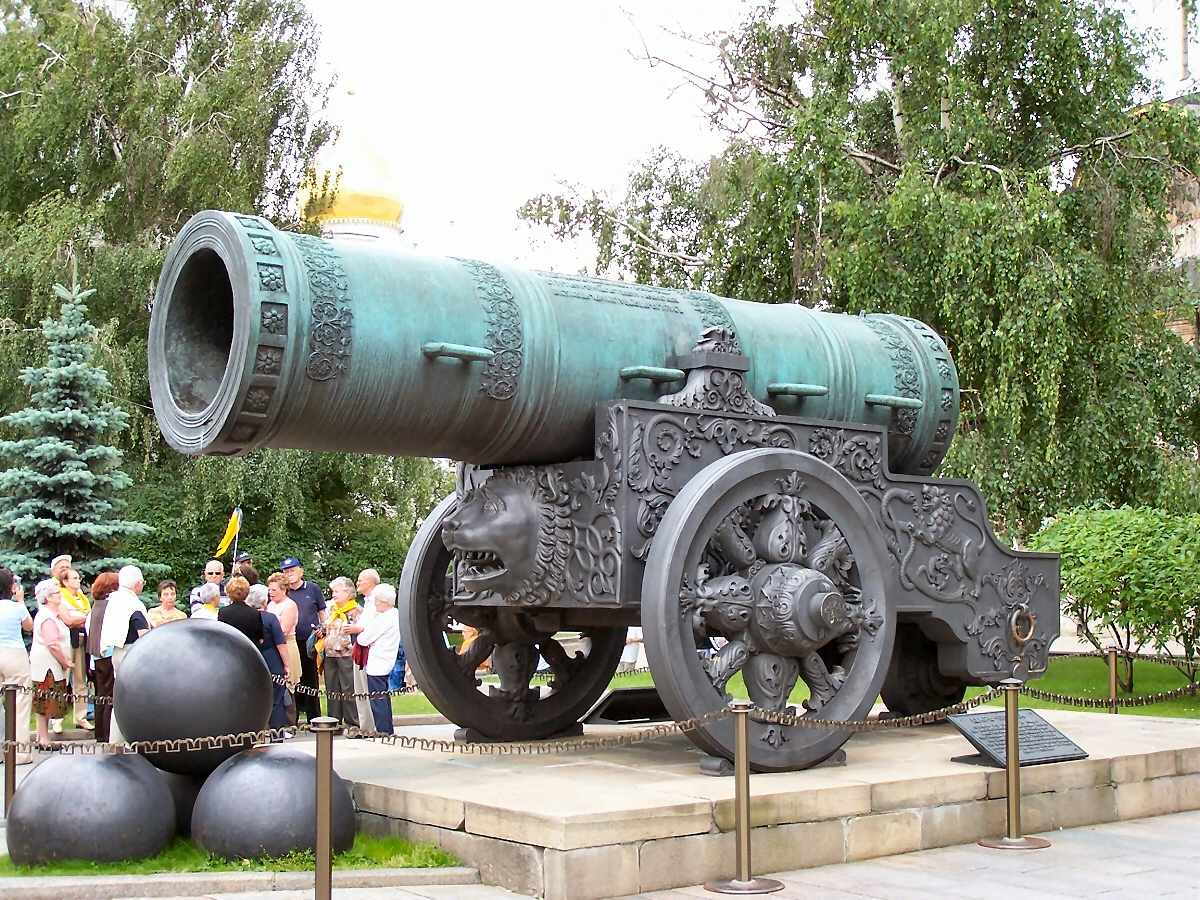
To be fair to Warhammer Siege, it is worth addressing seemingly the most common complaint: that artillery appears to quickly demolish the stronghold walls with little hope for the stalwart defenders. Many first time players have lamented their one and only experience with the game resulting in these catastrophic results. The underlying problem here seems to be the imprudent deployment of massive doomsday devices in the arsenal of the besiegers, particularly the 10-man siege weapons. These apocalypse weapons would have been equivalent to the historical Tsar Cannon or other medieval and Renaissance "super guns."

Complete contents.

The main problem here is that the default wall described in Warhammer Siege is for the lowly "border fortress"—a common, lesser castle often found in the Border Princes. These meager strongholds are cobbled together between the first few harsh winters on the frontier, when a would-be robber baron struggles to establish a foothold in the wilderness. With sparse resources and only unskilled labourers, those bandit kings who do not freeze to death in a half-completed castle before the frost subsides are only able to manage provisional, precarious fortifications to stake their claim. To the desperate outposts and colonies in the barrens, even these ramshackle fortresses are formidable symbols of frontier authority and power—at least until a new warlord arrives. Yet, in relation to these backwoods bulwarks, the most massive cannons in the history of the Old World are incomparable adversaries. The calibre of such ordnance would likely be as thick as the very walls of the border fortress. While such improbable batteries are designed to break down the mightiest citadels and bastions in the world, the lowly border fort hardly stands a chance against such awesome power.

The different plastic pieces—gate and two types of doors, trapdoors and ladders.

It is notable that the two previous siege games that reported disastrous results both explicitly lacked a critical component to any Warhammer Fantasy Battle game—the gamemaster. A decent referee would have readily spotted this incongruous matchup and adjusted the scenario to account for it. For example, a good competitor to a standard "border fortress" (which has a default 10 wounds or "defence points") would be the 5-man cannon (cannons are rated from the smallest 3-man culverin to the largest 10-man bombard). Such an artillery piece would chip away at a battlement and would cause a breach after 12 direct hits (several cannons working in conjunction would make even shorter work). A scenario featuring heavier ordnance would demand thicker walls, however. After all, as the Warhammer Siege rules suggest, the normal Toughness and defence point values "are standard for a typical Border Fortress," but "you may wish to vary this slightly" for mightier castles (Warhammer Siege, 35). Against a 10-man cannon, a gamemaster may increase the defence value of the walls to as high as 45 points, requiring an average of 4 successful hits to cause a breach.

All in all, Warhammer Siege has a lot to offer players who are looking for new kinds of scenarios to add depth to a campaign. It is worth exploring the true gems in this rules expansion, but I will leave that task to a later date. For now, I leave you with these photos to give you a sense of the scale and contents of the Mighty Fortress set. I found this item to be a great purchase—made from dense styrofoam sections that do not chip and can be rearranged into many different castle plans. Along with my recent find of a mint condition Warhammer Townscapes, I will have my hands full this summer building a complete Warhammer world for our local games.


Wednesday, March 20, 2013

Dynamic Combat in Warhammer

As my recent article on lethality creep suggests, and as Gaj's ongoing dramatic battle miniseries evidences, Oldhammer battles often consist of a gritty back-and-forth slugfest of smashing skulls and splintering armour. When the enemy is driven to rout by the press of steel, a friendly regiment can always swoop in, flying the banner to steady their nerves and rally them to return to the fight. Indeed, rallying and returning to seek vengeance on their adversaries is a frequent occurrence on the Oldhammer battlefields.

While this grit and gore is no doubt part of what makes the Oldhammer experience so unique, with every sword strike keeping you at the edge of your seat and each slain foe a small victory, the difficult odds of overcoming an enemy warrior may seem to produce a mêlée that is very static. Certainly, compared to the boosted lethality of later editions, fewer warriors fall to the swath of swords each round and each lost combatant means one less retaliation. So, when every blow counts, what keeps these gritty back-and-forth slugfests so dynamic? The difficulty in overcoming an enemy means that it is certainly feasible that a round of mêlée produces no casualties. Are there still interesting and tactical choices to make, even when the dice turn their back on you? Let's take a look at a few rules in Warhammer Fantasy Battle 3rd Edition to explore the options:

I Challenge You!
No doubt a mainstay of many Warhammer games, the challenge between opposing champions is a dramatic and stirring event. There is inherent risk and uncertainty associated with challenges, as the player is often stepping into the unknown and likely does not know exactly what he is getting into. Is that merely a regiment leader, or a major hero? Are their dangerous magical weapons involved? As models in Oldhammer can only wound adjacent base to base enemies, a powerful combat character is very much wasted on fighting mere fodder, and is best employed for more heroic tasks, including monster slaying and challenges. Matched with a fitting opponent, the warrior hero comes into his own. Refusing a challenge, on the other hand, will cause a cowardly champion to shrink back into the rear ranks and lose all respect he had earned from his regiment. The enemy is then given the chance to cut through the regiment in search of the abject and craven champion hiding amongst the fallen comrades. Challenges allow a hero to contribute more towards the combat results than from regular fighting, particularly against opponents with multiple wounds, and represent an interesting and fun sub-game of pitting your magical weapons and skills against the opponent.

Seize Their Banner!
The regiment standard is a symbol of the regiment's pride and origins. Unlike the aesthetic promoted in later versions of Warhammer, the diverse banners found in old dioramas seem to indicate that each unit is not only a separate component of the army, but comes from a different region, has a different background and perhaps even a different culture. While Newhammer armies tend to have a unified colour scheme of one or two tones that gives the army a general sense of uniformity, Oldhammer regiments are heterogenous, as found in the diversity of their banners which have a lot of individual character and personality. Seizing the enemy's standard is capturing the symbol of their mettle and everything they are fighting for, whether hearth and home or gold and glory. In combat, the regiment standard bobs up and down with the fray, acting as a beacon to summon the regiment's courage and compelling them to make a stand. The rules for capturing the enemy standard in Warhammer 3rd Edition are thus quite exciting and action-packed, as a regiment will fight tooth and bone to retain their icon in the mad scramble for the banner. In game terms, the death of the standard bearer (which is unfortunately fairly common, as the poor fellow has to stand in the front rank) means that the enemy may make a dive to the trodden mud to recover the fallen banner. The result is an immediate second round of combat (literally doubling the action for the round), which could end in the regiment retrieving its colours and chasing off the dismayed enemy, the pennant being crushed into the turf and lost in the confusion or the enemy capturing the standard and sending the regiment to flight (earning a slaughter of free strikes as they rout). A regiment that has lost its standard will remain sullen and demoralized for the rest of the battle, significantly increasing their penchant to retire from the battlefield.

Push Them Back!
Of course, battles can always be won even without causing excess casualties. All things equal, a regiment that has momentum, either carrying forward the impact of a charge or seizing impetus from the changing tides of previous rounds of combat, will overcome their foes. When this happens, the enemy is forced to step back under the press of steel and is forced backwards two inches. While this may not seem like a significant parcel of the battlefield, gaining ground incrementally allows the attacker much more maneuvering room for supporting regiments in the rear while further constraining and compacting the enemy position. Furthermore, while outflanking a phalanx can be extremely difficult, as the battle line is both very wide and is often flanked by powerful cavalry to intercept the enemy maneuver, pushing back the enemy center offers a critical strategy to breaking up stalwart battle lines. After a turn or two of pressing the enemy regiment to give ground, the attacker will have inflicted the quarter unit strength of casualties needed to force a rout test. When the enemy is put to flight, the attacker is now usually four inches deep into enemy lines and, restraining pursuit, is perfectly situated to immediately reform and charge directly into the flank of a central column of the enemy battle line. Needless to say, the resulting panic test can unfold the entire formation. When fighting regiments in isolation of a larger military formation, pushing back also provides other tactical choices. Should the victors leave their trenches to chase off the enemy for good? Should the winning regiment lose some of its cohesion to surround and mob the losers? Are there advantages to expanding the frontage, or would it be better to retain a rank bonus? All of these questions depend on battlefield conditions and can make for interesting decisions for the player.

As we have seen, even with the gritty and uncompromising combat of Oldhammer, there can still be compelling tactical decisions for the player when the dice fail. Exploring all of the options in Oldhammer combat truly helps provide for a dynamic and immersive experience, hearkening back to the roleplaying roots of the game. Importantly, these details allow combat to remain bloody even if it is tough fought, without artificially boosting mêlée lethality to spiral out of control and ultimately devalue the individual dice rolls into a sort of game of statistics and averages. The current tournament atmosphere of more recent editions of Warhammer is a testament to these latter-day changes to the structure of the game, where buckets of dice replace strategic thinking and certain "army builds" are presumed to reign over other, inferior ones. By taking serious the full body of game mechanics in older editions, sometimes dismissed as unnecessary and overly complicated "crunch," there are certain avenues to inject narrative and choice back into a game that some may feel has become entirely too determinate and therefore too prescriptive in its playstyle.

Thursday, February 28, 2013

Unsaved Wounds by Edition: Lethality Creep in Warhammer

Although I have the rules, I have admittedly not played a game of Warhammer Fantasy Battle 8th Edition yet. However, while following online discussions of the game and perusing the new system, I noticed an interesting trend. Units had, across the board, become much more lethal in this edition, with myriad special rules to allow more and more attack rolls.

To be sure, Warhammer has always been known as a "bucket of dice" game, although I have never seen this as a particular fault. The average attack in 3rd Edition, for instance, must roll to hit (an average of 2 in 6) and then to wound (3 in 6) before the opponent can make a saving throw for armour. It might be seen as much quicker to simply allow the attacker a 1 in 6 odds of mortally striking his opponent (which has the same odds as the two previous rolls), yet the rather simple and elegant mechanic of requiring multiple layers of dice rolling allows the game designer to subtly tweak the odds. For instance, a 3 in 6 chance to hit and to wound (or 25% chance to mortally strike) cannot possibly be represented on a single six-sided die roll.

But the recent disturbing trend seemed to force these elegant mechanics to their extremes. By significantly boosting the number of attack dice being rolled, the difference between subtle modifiers to one layer of rolls or another became blurred. The 8th Edition in particular has a number of rules to this effect, whether allowing two ranks of models to strike in melee, or a third with 30+ models in the unit (a "horde"), or an additional further rank with spears or double attacks from additional hand weapons. It soon became quite possible to levy 40 attack dice in one round of melee. Similarly with missiles, archers could now fire in two ranks or half of every subsequent rank for volley fire. An archer regiment arranged in four ranks and ten files could roll 30 attack dice in this manner.

With a sneaking suspicion, I then looked back at previous editions of Warhammer and found that this is not at all a new development. In fact, units have been creeping in lethality since the very first version of the game. I decided to graph the number of unsaved wounds a unit might inflict if arrayed in three ranks and six files (a number that simply made the math much easier). I gave the units a 5+ save and either two-handed weapons, additional hand weapons or spears and crunched the numbers against an identical foe (ignoring initiative, charging bonus and so on). This is what I got:


As you can probably see, lethality has been increasing regularly across the different editions. Some pairs of editions worked very similarly, and more or less represented minor incremental updates on the previous rules (as with 2nd and 3rd, 4th and 5th and 6th and 7th). What's the take away of all this? A cynic might assume Games Workshop has been tinkering with the system over time to make larger and larger armies more necessary. Another option is that perhaps the game designers have been trying to reduce the time it takes to play an average game of Warhammer, making it more accessible for those with a busy schedule. I suspect both of these answers tell part of the story.

Importantly, this trend very much changes the style of game from older editions to newer. In my mind, Oldhammer is very much a detailed, gritty warband skirmish game. Newhammer, perhaps a mass-battle game in 28mm scale. Something that might support this are the changes starting in 4th Edition to radically increase the lethality of combat resolution, a rule change that greatly compounded the general trend in boosted attacks. Here, the leadership of the losing side in a round of combat is almost reduced to nothing, making an average leadership role nearly impossible. Losing combat by only three points, for instance, means a human regiment will flee 83% of the time, whereas there was no such modifier in 3rd Edition and the same human squad would have a better chance of sticking to the combat than fleeing (nearly four times better odds to remain). Furthermore, units that did flee were entirely wiped out, whereas in 3rd Edition they would merely suffer three or four further casualties from the rout. The result was that 3rd Edition warbands, when they did flee, could easily expect to return to the battle later. Later editions made these units much more expendable, resulting in much faster games but perhaps less character and narrative to the warriors fighting the battle.

Wednesday, August 1, 2012

Bonded to the World

In many ways, how players are rewarded at the table will define your game, and thus your game world. After all, the world only comes to life in response to the players' action (or inaction), which is then driven by their goals. Rewards give the players an indication of what they should be doing, generally speaking. At the same time, rewards are much more than mere incentives, which would lead players along a predesigned course. Rather, how the players go about achieving these rewards is unique to each group and to each story, and thus rewards must be open-ended. As mentioned in the previous article, players should always be given problems, not answers. How they answer problems is an expression of their freedom within the game world, and is the very narrative of the story itself.

Perhaps a good example of this can be seen in "Old Geezer" Mike Monard's fascinating on-going "tell-all" about the early days of Dungeons & Dragons. As he describes, experience awarded for defeating monsters in the Greyhawk dungeon was almost nothing, perhaps only enough to round off the experience gained from treasure, and that in his own games he does not reward any experience for monsters. The picture that immediately forms is one in stark contrast to modern "dungeon delving" games, with the players cast as "amoral mercenaries out to loot the dungeon," as one commenter put it. Where there is no reward, there is no risk-reward structure, and thus monsters are carefully avoided, like elite soldiers sneaking deep behind enemy lines in some subterranean fantasy Vietnam.

In the same way, a game that does not have a clearly identified reward structure is a game (and a game world) with an identity crisis. Without a framework of rewards (whether fame and fortune, or something else entirely), the players will not have a clear idea of what they should be doing. Without player action to fuel it, the world cannot come to life. This is probably one of the most discussed aspects of Dungeon World, still a work-in-progress, and several iterations of an "experience" system have been proposed (experience being one way to quantify reward).

One of the options that has gained the most traction, although not the current "official" solution, is Ryan Macklin's experiment. A hold-over from the primogenitor game Apocalypse World, this system has each player pick a basic strategy for another player to pursue that session (such as pulling stunts, defending others, acting diplomatically, solving possibles and so on). Each time the player acts accordingly, they earn experience, rewarding immediate and short term narrative styling. Thus, a Cleric (bidden to be more aggressive that session) will show a new angle to his character, as he beats the goblin he interrogates, or lashes out at his superiors in the monastery.

This is a fine system in itself, but perhaps more suited to the game it originated from (Apocalypse World is all about psychologically breaking characters down in a ruined world where no one is granted tomorrow). As forum-goer nemomeme points out, the reward structure determines what the very game is about. We must be careful to think about the essential design goals behind the game before tackling rewards.

So what is adventuring about? The very principles of Dungeon World (which make it so interesting and unique) demand that the fiction comes first. Like microgame adventures, the rules are discrete components that have specific triggers from the fiction, and are otherwise out of sight. The principles also state that the game is a conversation, so thus the rewards should also be in conversation. Perhaps a good model for reward, which is based on the fiction and also in constant conversation, would be Jeff Rient's article on "eXPloration".

Here, I can imagine players and referee discussing, as a group, what they want to do, as it comes up in the fiction. They could even create "experience ladders," listing some goals and objectives. Once players have achieved (or failed) all of their plans for a front (a living, breathing local situation), and the game master has no more moves to make, this should indicate that the front has been fully explored and the next expedition should be chartered. Each player might have a different list, but commonalities and overlaps are expected, as the party is acting within the same local area. An example might be:

• Find the slave camp deep in the jungle (+1 Exp)
• Defeat the Guaraxx lurking in the delta (+2 Exp)
• Get revenge on those pirates (+1 Exp)
• Discover what has made the villagers so frightened, and make it safe again (+2 Exp)
• Climb to the top of White Doom Mountain (+3 Exp)
• Spend a night in the Lost City (+1 Exp)


These goals are constantly being discussed, revised and traded as the fiction dictates, and represent paths of action parallel or tangential to the plot of the front. They give the players a clear idea of what this world is about (that is, the cool and amazing things to do and see, the supernatural adversity to overcome and the bonds to play off between players in the process). In fact, in many ways, this is merely an extension of the bonds rule from Dungeon World, which gives players an initial motivation before the first front is even encountered. Here, in addition to being bonded to each other, the players are bonded to the world. Most importantly, this method lets the fiction come first, which is an essential quality of Dungeon World, and a great deal of what makes it so unique.

Friday, July 27, 2012

Worldsmiths

I wanted to expand a little on the previous discussion of campaign preparation. I do not believe a referee's preparation should look anything like a published adventure module, which were fixed and scripted scenarios developed specifically for the tournament milieu. These are, of course, fun to read for inspiration or to run the players through a "gauntlet" typical of gaming conventions. However, for home games, these adventures are far too scripted, and go against the basic principle that narration is neither controlled by referee nor by player (as discussed in the previous article).

Yet, it is imperative that the game world seems real and adventureful at every moment and in every scene. Some work must go into world creation, but this fashioning and shaping cannot have a stymying effect. The generative process must be continuous through the process of playing, so that the world comes alive and retains full fluidity. Player decisions, ever capricious, must remain meaningful.

Marshall Miller has given a good example of what this might look like for Dungeon World, a fan variant of Vincent Baker's Apocalypse World. That game already divides the environs of a game world into Fronts, which are living, breathing local situations that the players can get themselves mired in. Not only is a Front (e.g. the Caves of Chaos) a vivid and lush location to explore, but it is also an ambiguous, evil force to oppose the heroes, a ticking time bomb (with signs of the looming disaster), and a creature in and of itself (capable of executing its own moves and maneuvers against the players). A Front is a setting that truly comes to life, like the Mines of Moria, and opposes the heroes by its very nature. It must be carefully explored, discussed and negotiated by both the players and the referee alike, with the primary vehicle for this being dice rolls and decisions.

What Miller has added to this is the notion of the "Adventure Starter." This is another sort of environ in the game world, contained within a quick, flexible toolkit designed to spark the initial interest and action. An entire "Adventure Starter" environ consists in a reminder of the referee's guiding principles (make the world real, make it full of adventure etc), a list of scenic impressions to colour your descriptions and make the world real, some open-ended questions meant to both inspire sub-plots and to hook your players, a list of artifacts and creatures that might be of utility for the referee and finally a list of new moves open to the players while they explore the setting. Importantly, there are no maps, no pre-scripted story and no hard timelines. The referee could glance at the two-page setting and read as much or as little as he likes without missing anything important.


Both Fronts and Adventure Starters are an excellent way for a referee to prepare the environs and locales of the game world. They are inspirational and fluid, and may be used before and during the game to drive interesting scenes. At the same time, preparing this kind of gaming world is not about pre-establishing events, plots or geography. Those are answers, and the answers that the actual playing experience will give you are always better. Rather, the referee should start to think about preparing problems which do not necessarily have an answer… yet. Confronted with a living, dynamic and danger-filled world, the players' actions and words fill the adventure-engine that the referee has prepared, fueling gameplay that players can actually care about and feel.

Tuesday, July 17, 2012

Say No or Force Them to Make a Saving Throw Versus Death

Flipping through Diaspora yesterday, I came across a sentiment increasingly common to modern roleplaying games. At the core of Diaspora (and many such newer games) is the phrase "Say Yes, or Roll the Dice." Essentially, this axiom requires the referee to always endorse the players' proposed strategy, or at least give them a shot with a die roll.

For Fate fans (which includes Diaspora, Spirit of the Century, Legends of Anglerre and many other related games), this has been heralded as a very "tactical" system. Players are constantly coming up with spur of the moment plans (actually, justifications for why they should win), which the referee must then accept, or let the dice decide. It is reminiscent of old school procedure, where the referee listens to the plan carefully and then comes up with a target number and rolls the die to determine success. The only difference is that "Say Yes…" precludes the referee's veto. The referee is instead slavishly committed to accepting every player strategy, regardless of how believable it is, or how it circumvents the referee's own schemes. Rather than staging a tactical opposition, the referee is subject to player whim.

This is, perhaps, seen as contrasting adversarial-style refereeing. It also developed, however, in response to a style of Dungeons & Dragons that increasingly defined characters by "Player Options," "Powers" and other mechanical advantages. Instead of thinking through a problem, players would simply look down at their character sheet for all the answers. Written in 2002 at the height of the third edition, The Burning Wheel fantasy roleplaying game was, in many ways, a response to what Dungeons & Dragons had become. In contrast with a referee-dominated narrative and players with mechanically enabling character powers, The Burning Wheel introduced the "Say Yes…" paradigm for the first time, and thus framed the referee as an enabler and the players as holding narrative control.

Of course, buying into this premise of "player control versus referee control" has obscured the original simple and elegant functionality of Dungeons & Dragons. Recently, I asked Mike Monard (veteran of the original Lake Geneva campaign) whether referees back in the day would punish Magic-Users who neglected utility spells and front-loaded combat spells by throwing in obstacles that would require the former. His response was illuminating, and is worth quoting here in full:

"Remember… the world was created first, THEN the characters were created to explore it. The way Gary, Dave, and the rest of us did it, we would set up our dungeons such that you would need a selection of both combat and utility spells. Choosing how to allocate your limited spell slots was part of the fun, as was dealing with not having a certain spell where it would be useful.

The world came first, so changing the world based on player spell selection would have been cheating. It's about the only way for the referee to cheat, in fact. Any ref who changed things on the fly to punish players based on that day's spell selection would have found themselves without any players.

What was there, was there. There was a nest of six trolls on Level 1 of Greyhawk. If you went there with three first level characters, you found six trolls. If you went there with nine 11th level characters, you found six trolls. Changing the world as you seem to be describing above would have been anathema. It is really the only way to cheat as the referee.
"

The referee developed a world, the players investigated it, and changing things after the fact was cheating. It was part and parcel of suspension of disbelief that the world followed its own laws and trajectory. How player decisions might intersect with that trajectory was largely unpredictable, and there was a level of excitement and discovery for both players and referee. There is a classic movement here which is common to Shakespeare plays, whereby one person would pass partial information along to another individual, who would then filter it further to a third. Consider the Doctor who agrees to provide the Queen with a vial of poison but, fearing her evil designs, actually gives her a sleeping draught. The Queen, thinking the elixir to be a poison, hands it further to the naive rival princess, promising that it is a healing balm to be taken when she is feeling ill. The King falls ill and the princess administers the sleeping draught. Chaos ensues.

Likewise, the referee may know what is really going on, but this is filtered through interrogated non-player characters or partial clues that the players may find. Only half of the truth reaches the players, who then introduce a further (and unpredictable) abstraction through their misinterpretation of the situation. This beautiful friction makes for the stuff of true legends. Here, the referee is neither adversarial nor enabling, but rather purely neutral (which reminds me of an excellent and illustrative Knights of the Dinner Table comic, where the Knights are able to "outsmart" B.A.'s flagship dungeon).

The take away from all of this is that we as referees must again become world-smiths. It is hard work, and tremendous preparation must go into the campaign as well as each individual session. Different webs of non-player characters must be charted, including individual motives and knowledge. Interesting eventualities must be at least initially considered, while some obstacles with no apparent solution should be cataloged (perhaps a dungeon at the top of a perfectly sheer cliff, encouraging the players to be creative). The story will take unexpected turns, and the referee's encyclopedic register of history and dramatis personae will breath enough life into the world that it will take on its own momentum. In all of this, narrative control belongs to the friction between player knowledge and referee impartiality. As the authors of Adventurer Conqueror King put it, "every campaign is a law unto itself" and the excitement comes from these worlds taking on a life of their own.

Thursday, July 12, 2012

Every Fighting-Man is Unique

I am not aware when it came about, but at some point a vicious rumour crept into our collective understanding of Dungeons & Dragons. This rumour subtly, surreptitiously put forth the notion that the original game, in its basic, open-ended template form, was somehow too limited. There weren't enough monsters, there weren't enough classes, there weren't enough powers or abilities. The original game, so this shadowy speculation would have you believe, just didn't have enough stuff.

So the next generation of more "advanced" games came out, promising more things for the throngs of adventure-hungry players to do by promising game rules that were packed with more stuff. Ironically, on the other end of this history (some thirty years later), we are now flooded with such games—enough to stack from floor to ceiling in a dusty, unvisited brick-and-mortar gaming store. We certainly have enough adventure, yet, we have very few players hungry for adventure. What went wrong? What was it that originally enchanted those players, who came from every walk of life, and made them so esurient?

Today's games have naturally attracted a very different, and far less diverse crowd (which is unfortunate, not only because we lose perspective and creativity, but because many of the so-called "gamers" are individuals that no one in their right mind would like to spend an afternoon with). The excessive influx of systems, mechanics and rules to our Saturday afternoon scenarios naturally caters to rules-obsessed types, and the move away from free-form, communal decision-making and storytelling alienates people who didn't sign up for this level of commitment. But there is also a delightful agility that was somehow lost in this sad transmutation.

I believe that earlier adventuring aficionados truly understood that the original game was merely a template. The apparent limitation, for example, to choose one of three iconic character options (Fighting-Man, Magic-User or Cleric) belies the fact that these choices were never meant as more than basic blueprints from which characters were built. Looking in the three little books, for instance, one finds extremely few limitations: ability scores have next to no impact on the game, the rules allow dual and multi-classing, and any character can attempt any action. There was essentially an adventurer, and different options determined what access he or she had to different equipment and spellcraft.

One of the rarely highlighted aspects of the original game in particular is the concept of level titles. This dizzying array of honorifics is typically understood as a strict progression, one to the next, so that a Hero becomes a Swashbuckler or a Sorcerer becomes a Necromancer or a Bishop becomes a Lama. Yet, as we can see, this progression is not altogether coherent (why should a Catholic Bishop become a Tibetan Lama, exactly?), which may have led many to simply discard level titles entirely. At my table, I encourage my players to really make level titles their own, however, and use them to define their characters.

Maybe Toki, a Japanese Fighting-Man character, starts off as a Veteran. By level two, I encourage him to describe how his Fighting-Man is different, and soon he takes the level two title "Sohei" (or warrior monk, becoming an ascetic mountain warrior). During level two, I allow him to track monsters through the woods or navigate untamed mountains. By level three, the campaign has taken another turn: Toki takes on the role of a pirate and starts swinging from ropes and intimidating his opponents.

Customizing level titles is an excellent way to show your players that the archetypal classes are merely base templates from which characters are developed. I do not believe a party with 14 Fighting-Men should feel like a party with 14 Fighting-Men. The fact is that the Fighting-Man class, like the other classes, is broad enough to contain every sword-swinging hero one could dream up. Each character should be different and unique, and the rules of the original game are just open-ended enough to allow that. In reality, there is nothing more alienating than bringing a new player to your table and telling him that his character concept has to fit within your game's hard boundaries and strict definitions, and this is one of the main reasons that this hobby lost its diverse player community: we stopped asking people to bring their own creativity and ideas to the table.

Thursday, June 21, 2012

What is a Setting?

Campaign settings have always held a rather schizophrenic place in this hobby. The first settings, Blackmoor and Greyhawk, were merely the dungeon and the environs around it, extending further only rarely, as the adventurers pursued other plots (and then collapsing back to the central dungeon when new players came in). A great example of this are the adventures of Robliar, Tenser and Erac, who dropped through the chute to China in the ruined pile of Greyhawk Castle, only to adventure back to the other side of the world, drawn like a magnet to the tentpole of the campaign. Other campaign events created new areas, such as the domain of Iuz (a foe who was originally released from the dungeons of Greyhawk), yet these new area always deferred to the original environs (with no sustained campaigning in the new regions).

Yet, when TSR took off, it became profitable to publish fully detailed and designed campaign backdrops. World maps were drawn up for the first time ever, and the local environs around Castle Greyhawk became the "World of Greyhawk" (true, the original Greyhawk was situated on the C&C Society map, but the extent of this map is unknown and apparently not well developed). With published settings, the concept of a campaign backdrop turned from the small, local region to the internation and global scene.

Still, I suspect, most referees ended up designing their own settings for their home campaigns, much like Arneson and Gygax themselves had done. The natural impulse is not to delineate a sweeping world, painting with a broad brush, but rather to go ever smaller, refining the details and going deeper into the very concept of the setting. The former approach is geographic, and creates boundaries that delimit thought even as the "broad approach" is meant to liberate possibilities by making the world seem "big." The latter approach is conceptual, and defines the setting as an idea, not a fixed and stale cartography where the possibility for new events must be fit into a pre-existing framework. They are fundamentally different approaches, one structural and the other theoretical, that produce very different experiences for the referee (and we must remember that the referee is a player too, and that campaign preparation is part of the game).

Interestingly, it was setting stagnation (and setting over-definition), that first drove Arneson to boredom with Braunstein, leading him to create Blackmoor. The Napoleonic scenario had been fully described and defined, and the possibilities exhausted, by a structural approach to the scenario that put characters in relation to each other like chess pieces. Instead of focusing on the politics of the scenario, however, Blackmoor focused on the root inspiration at the core of the setting. As the DCC rulebook says:

"Make your world mysterious by making it small—very small. What lies past the next valley? None can be sure. When a five-mile journey becomes an adventure, you'll have succeeded in bringing life to your world." (Dungeon Crawl Classics Roleplaying Game, page 314)

Here, the sage advice to "think local" should be paired with a conceptual approach to campaign definition. There is world enough in the 50 miles around your central megadungeon: make things happen there! Festivals are thrown, distant merchants arrive, new enemies appear, alliances are struck and broken. The core concept of your campaign inspiration is often difficult to articulate, but one should not flee from this and start detailing regions that no player will likely ever see. Instead, turn back and develop that core concept more and more, mining it for new inspiration, and do not be afraid to let it change as your interests (or real events from the campaign) require. No one truly knows where such a setting will go next, yet it always feels like home.

Friday, June 15, 2012

SUPER OD&D

Marv made an interesting comparison over on the Goodman Games boards. To me, Dungeon Crawl Classics is like a Super OD&D (in the tradition of Super Mario Brothers games). Indeed, it has many similarities to the three little brown books of the original game, yet it makes thewy additions and expansions to that base as well. The first volume of that game alone shares basic assumptions about the social scale of experience levels, the power of classes, the protected niches of characters, the nature of magic.

Take magic, for example. Via Chainmail, the magic system in the original game is highly unpredictable, where magic-users can cast a spell only to find their spell miscast without benefit (and lost), cast successfully (and retained for future use) or caught somewhere in between, in limbo until the next turn. DCC takes this basic principle and adds much more detail, so that miscast spells might also transform the caster into a hideous creature, or successful sorcery might prove unexpectedly powerful. Add in supernatural patrons and character-specific spell manifestations and you have a magic system that is built from the same basic foundation as OD&D, yet with much more muscle to it.

Similarly, the progression of power for fighting-men is modelled directly on OD&D. While later "advanced" editions of the game weakened the fighter, introducing the "linear fighter, quadratic wizard" quandry, it is important to remember that this problem is entirely foreign to the original three little booklets. A ninth level fighting-man was simply nine times more powerful than when he first started out (similarly so for magic-users). He fought as nine men, with nine attacks (each the strength of one man's strike). While his "advanced" cousing, the fighter of AD&D was reduced to two or three attacks a round, the DCC warrior returns to native soil in a unique way, making three attacks, each strike the strength of three men (for identical output to the OD&D fighting-man, but with less dicing). Add in critical hit charts, fumbles and mighty deeds, and again you have a robust and powerful addition to the original game.

Even the social scale of characters in DCC is reminiscent of the original game, where a first level warrior is no mere soldier. Roughly speaking, a first level character is already the hero of the townships, an unlikely local that rose to unexpected prominence for his deeds. His tales will be told in the few villages of the valley for several generations. A level two character is the celebrity of a major city, well known by all but the unsophisticated. By third level, an adventurer has already rose to the prestige of a conqueror-king or slayer, whose legend will endure. This is far removed from the scale of power in later games, but is actually perfectly in line with the concepts found in OD&D.

More comparisons can, of course, be drawn with the other volumes, but this is just what comes to mind while paging through Men & Magic. I am curious how this plays out over longterm play, but I suspect the pace and style of DCC would be very reminiscent of the original three little books. Of course, it was always a design goal of DCC, it seems, to start at 1974, but only go backwards from there, instead of forward into the future.

Saturday, June 2, 2012

Kickstarter

It's raining today. I'm in the home stretch of working at perhaps my second worst job (I worked at a nursing home when I was a teenager, which takes the cake by far). I always love the rain—gusting about and dreary. It reminds me of a vacation in Ireland from my childhood, where I first walked wide-eyed into a small, bright store. "Games Workshop." I didn't know what they all were for, lining the walls and display cases, but I left with a promo magazine and nearly spent the rest of the trip staring intently at one particular picture of rank-and-file Wood Elf spearmen defending a dark forest.

I worked all the next summer at my first job, earning $3.15 an hour on a neighbor's farm (I had to haggle to get that extra 15¢). I was there from 6am to 4pm, shoveling hills of manure to a location 3 feet away, running away from homicidal stampedes of dairy cows, and finding lucky cowbells in the tall weeds (long story). After the summer, I picked up the well-worn brochure again and called the number on the back.

That was my first fantasy gaming purchase. The next high point would come in 2005, when I accidentally chanced upon a dusty copy of HackMaster 4th Edition in a store. It perfectly captured everything I loved about AD&D (I had been indirectly led to 2nd Edition through Warhammer Fantasy Battle). I loved this unlikely hobby. I found there was nothing else like it, nothing which created a whole new world within my daily imaginings. And I loved working for that, and buying into that. Pen and paper gaming, whether wargaming or roleplaying, became the satisfyingly open-ended, undefined daydreaming that buouyed me in the work-a-day world that it so contrasted. As the tongue-in-cheek call to arms on the back cover of the HackMaster Player's Handbook read:

"For those of us that live in a world that forces us to conform, to abide by the rules day in and day out; for those of us that suffocate in our daily routine of breakfast cereal and ham sandwiches; for those of us that slave each day in our cubicle working for the Man; those who would be heroes if it weren't for the constraints of reality, we present:"


Websites, forums and online communities only entered into that picture later. I didn't even realize Games Workshop had a website in the beginning, and used to order completely from printed catalogs, referencing only small, grey photos to specify with the ever-patient sales rep exactly which Wood Elf spearmen poses I wanted. There was a sense of adventure in not knowing everything that was going on in the industry, or not knowing about everything that was due to release soon. The possibilities were endless, and the frontiers of that world mysterious. I was happily in a bubble, and eager for every new bit of news that was so hard-won at the time.

Crowd-funding has changed a lot about the indie publishing industry. Yet (and I hate to be the first one to suggest it, as it seems to be breathing such real, quantifiable life ($) into the scene), I suspect there is a bubble here that is close to popping. Indeed, game designers have taken to crowd-funding largely because there is no current technology for making traditional publishing-distribution chains viable for niche markets. Like Google Checkouts, Kickstarter (et al.) allows reliable direct sale opportunities for small publishers that have been largely shut out by conservative distributors. But what cost is there for this immediacy? Niche hobbies thrive on interest, but while everyone seems to be excited about stretch goals, interactive product development and tiered reward levels, I can't help but feel that some of the magic has been taken out of the process.

As consumers, we are getting a lot of direct information through participating in funding, whether in the form of special sneak peaks, previews of potential new products or simply some small part in sharing the product design. But more interaction, and more information, is not always a good thing. I can imagine a Kickstarter burnout in the future, where the excitement that crowd-funding pre-orders generate is overtaken by information overload. A burnout where our building interest in seeing a project as it developes dissapates a little more when we finally receive the product we have been over-expecting. Crowd-funding means you are paying ahead for a product that you will not have in your hands for many months. Even with great products, what is the evaporation rate of that excitement that must survive that long stretch?

There are other problems with crowd-funding as well. It seems to be accelerating the already miserable state of distribution, pushing local gaming stores further to the fringes, and increasingly moving communities online. One of our local Islamic scholars here in Toronto remarked about that final point just last weekend, while speaking before a (traditional) dinner fundraiser for his school. In reference to online education, he argued that it is ironic that online communities are supposedly all about connecting with each other, while in reality they leave us more practically disconnected than ever before.

I don't really have another answer, and simply saying "well, the glory days of roleplaying games are over" and letting the entropy of distribution set in seems passé. Kickstarter et al. seems to have breathed new monetary life into the OSR, but let's not forget that the OSR began well before industrious-types had figured out a way to capitalize it. It was carried then by traditional enthusiasm of tangible substance. While websites like Kickstarter have been proven to generate hype, at the end of the day, the enduring proofs in this hobby are quality products on the one hand, and an abiding sense of mystery on the other. Unfortunately, crowd-funding tends to be antithetical to both ends, as it creates a very low barrier for self-publishing, while also flushing out the entire discourse of what makes a satisfying roleplaying game product into terms of what is immediately gratifying. Even then, with the nature of project funding, the immediate gratification of spoilers, previews and shared development are only deceptively immediate, creating dangerous over-anticipation.

Wednesday, April 18, 2012

Dwimmermount

Dwimmermount is a classic dungeon in every sense. The preview for backers of the Kickstarter has a first level that feels both formal and archetypal, yet also lavishly rich in atmosphere. There is a strange mixture of James' staid writing style and the moody ambience that quickly coalesces around the dungeon environs. His writing is effective, and creates a gloomy picture of a ruined hall, with walls and floors now too inert and mute to tell all of their stories.

As James' promises elsewhere, these rather mournful early hallways and chambers will eventually give way to something much stranger. From that discussion, and James' interest in planetary fiction, deeper levels will seemingly take a dip towards period science fiction with Burroughs et al. While it may be judging a book by its cover, from the early drafts I expect the resulting product wil be a well-woven and meticulous classical dungeon, full of ambience and character, with a few twists and turns towards the finale.

In that same discussion, James has expressed interest in using Dungeon Crawl Classics with Dwimmermount. While this is also my current game of choice, the more I read it, the less I am convinced that DCC is well suited by a megadungeon. One of the early design goals was that DCC was not D&D, and would not follow the same path that D&D took. DCC cleaves closer to pulp 1970's science fantasy literature, whereas Dungeons & Dragons became beholden to its wargaming roots. The dungeon is well designed for the later style of play, with gritty room-to-room warfare and strategic exploration and conquest of different zones.

In contrast, Dungeon Crawl Classics seems (perhaps ironically, given its name) better suited for episodic play typical of pulp novellas and the short stories found in the back of cheap science fantasy rags. DCC personas do not fight for every inch of ground with an army of henchmen, but rather they go on flashy capers, discover horrible secrets and fight gross-out final bosses.

This style is well supported by the panopoly of modules Goodman Games has lined up, but I am wondering how it would look for novice judges trying to prepare their own material. The approach I have been taking lately is similar to the method I used in an unpublished homespun roleplaying game a while back. I would build a somewhat self-contained locale (called a "setting") and come up with 2 to 6 major spots in the location (called "scenes"). Scenes were evocative locations where significant story encounters would occur (thus, extraordinary events would never happen in ordinary places, and vice versa). Different settings would be connected in a web geography according to how the narrator expected the plot to unfold (and later, redrawn according to how the plot would actually unfold). Settings themselves would be given brief and colourful descriptions, which would help the narrator improvise.

Thus, the city of Swampgut (setting) could be connected to Cairnlands (setting), which would be connected to Blagga's Hold (a setting, with the descriptors: "crumbling for centuries," "dry mud-walls," "red qwartz canyons," "ant-hole hallways" and "dry creekbed"). Once the characters beat a certain number of the scenes in Cairnlands, they could cross from Swampgut, through Cairnlands and to Blagga's Hold. The latter might have four scenes, including "last standing guard tower" (bird's eye view, crumbling steps, massive bonfire, Blagga's spy-falcons), "Blagga's Harem" (deep in the bowels of the fortress, eunuch guards, debauchery, brazen idol, Blagga's platform, poor acoustics), "black pit" (thousands of feet down, lightless warrens, lurking minotaur, sandy arena) and "master kitchen" (hundred cooks, strange meats, massive hearth, hanging pots and pans, chaos and clamor).

How the players interract with such a setting is freeform, and the judge is encouraged to briefly describe otherwise uninteresting travel. The characters could sneak around the creekbed, find a secret entrance in the wall, and creep through winding warren-like halways until they find a peephole that spies into the harem (ahem, to overhear the infamous Blagga's plans, of course). Once the players goals were sufficiently achieved (or failed), the setting would be expended and the story would advance. For settings that are pure obstacles (like the aformentioned Cairnlands), the narrator may require a certain number of scenes to be beaten to open up further settings.

This is a quick way to sketch out a basic map of the story, but it is still flexible to be modified on the fly. By focusing on dramatic moments and places, such a campaign would feel more pulpy and narrative, which can be scaled back according to the tone the judge would like to set. This approach de-emphasizes mapping, tracking of time and supplies, and the general inertia of traditional exploration. This does not provide an actual plot, however, and I hope to touch on a few tips for adventure design in the near future.

Monday, April 16, 2012

Player-Facing Initiative

There is a nice effect that goes along with keeping monsters mechanically freeform. From planning to implementation in the campaign, such enemies remain open-ended in the minds of both the judge and the players. The unknown shifts from simply "what the players cannot see behind the judge's screen" to the unknowable, as it draws from the vague and unthought potential of the judge's ongoing process of imagination and reimagining. Such monsters are free to continually evolve with the world as it is explored by the players, and are infinitely malleable to the twists and turns of plot that are inspired during play.

Dungeon Crawl Classics supports this, and goes so far as to say that monsters and players are not equivalent, and that they do not play by the same rules. This is a refreshing break from other games that try to "stat-out" monsters in terms of player-centric mechanics (giving them levels, classes, feats, skills and so on). Instead of these constraints, monsters are completely unfettered by design limitations, and are freeform enough to allow the judge to continually present them in new and unexpected ways (this is also encouraged by Lamentations of the Flame Princess, I have heard).

Even on a small scale, it is nice to break the symmetry between players and monsters. In the spirit of Robin Law's innovative GUMSHOE system, I have been thinking of using more player-facing mechanics with my world. This sets up monsters and players not as equivalent pawns in a wargame, but rather monsters are just part of a rich environment that players must struggle against. By leaving monster ability and behavious nearly completely undefined, the game simply feels more narratively oriented.

As a concrete example of this, I am strongly considering dropping traditional initiative rolls in combat. The systems that we have come to recognize (group initiative or individual initiative, rolled at the beginning of combat or each new round) are simply not tied to the narrative of the battle at all. For the most part, they are highly random, disconnected from the actions of the combatants and (perhaps with the exception of group initiative) discouraging of cooperative actions. Instead, I am proposing that all combatants describe their actions at the beginning of the round and, if any actions conflict, the player must dice their initiative against a (10 + Monster's Init. Modifier) DC in order to get his action off first. If the sequence of actions is obvious (i.e. ranged attack versus melee attack), no dice are needed.

For example, if a second level warrior (Agility 11) was going to hack an Android (Init. -2) in the Denethix sewers, and the Android was going to toss the damsel he is carrying over his head into the incinerator, the warrior dices 1d20+2 versus DC 8 to see if he makes it in time. The same would go if the Android was going to attack the warrior (to see who gets to roll their attack first).

This nicely mirrors Robert Fisher's advice, and keeps the actions of opponents fairly inscrutible. Monsters fall into the greater narrative backdrop, and are struggled against for narrative goals. Such player-facing mechanics ultimately make opponents less like discrete actors, and more part of the rich environment.

Saturday, April 14, 2012

Monstrous

Dungeon Crawl Classics has got me thinking about monsters lately. Like the Random Esoteric Creature Generator, the maxim of DCC is that no encounter with an enemy should be the same. Monsters are aliens, outsiders, and the demons of folk lore. They do not play by the rules of nature that bind men and earthly creatures, nor do they come in the familiar forms and images that mortals are accustomed to witnessing. There is a revulsion and fear of the monstrous that goes beyond pointy teeth and sharp claws to something deeper—something automatically rejected by the human psyche.

J. E. Holmes' version of Basic Dungeons & Dragons came the closest to representing this in play. That humble booklet had a dizzying four score monsters, only the first third of which would even make for a fair fight against beginning characters. As has been discussed elsewhere, the peculiarities of the Holmes edition imply an entirely different style of play than later versions of the game, where heroes approach the unknown with far more caution than bravado.

The Dungeon Crawl Classics book calls to the reader from the same mythos, and provides potent support for making an encounter with the monstrous truly weird (including custom charts and tables for humanoids and undead, and random generators for dragons and demons). Lately, however, I have been thinking, "why not go one step further?" What if one were to drop humanoids entirely? What would a world look like, if the only enemies were humans, the undead or the truly hideous and solitary things dreamt up by the Random Esoteric Creature Generator. Heroes would no longer be paired up against equal numbers of opponents, as if combat were merely sport, but would be truly afraid at the discovery of a new fiendish, unknown and threatening being. I want to be there at the table when a new player asks, "Why is this forest crossed off on the map?", only to receive the answer, "The eyeball beast is there. We don't go there anymore."

This attitude towards play is nicely reinforced by DCC's experience point system as well. Interestingly, monsters are not given any challenge rating or experience point total. In fact, there is absolutely no way for a novice judge to estimate the danger a monster poses to the party ahead of actually throwing it at the players. Experience reward is only determined retroactively (one, two, or up to four points), according to how much the players struggled with the encounter. While narrow-minded referees may balk at this innovation, it is actually an incredibly elegant system which breaks the bad habit of thinking of monsters as having some intrinsic point value. The result is far less bookkeeping, more accurate rewards and monsters that are free to be, well, monstrous. After all, if all encounters are scaled to player power and monsters are not allowed to run amok and put the party to flight fully half the time, the literary concept of monster sort of loses its purchase and the game descends into boredom. Humanoids are just one branch of this problem, as they tend to be narratively predictable and mechanically equivalent to the player characters. A world without them is a world of the unknown, something that players can truly be afraid of.

Appendix M: Extra Monsters
Ghost — Nine foot tall, bipedal outsider. Seen indistinctly from the corner of the eye, and invisible, immobile and incorporeal if looked at directly. The Ghost appears to not have a side or back, but is always facing its prey. A silicon based entity, coated with long, dark brown quills. Believed to have only two arms, each ending in 13 to 17 claws. Complexion is a shadowy void marked by two sparkling ochre eyes. Special powers: Transfixing gaze (only when seen in from a reflecting surface), perfect silence, regeneration (with consumption of bloody flesh).

Small, young dragon (13 years). HD 5 (10 HP), Spd 40', poison breath (Fort vs 15, save or die, 1/day), AC 16, 2d20+8 (claw/bite). Ventriloquism (cast at 1d20+2), Hypnotic stare (Will vs 15), Clear passage through vegetation, copper-coloured, chaotic. (Randomly generated from the Dungeon Crawl Classics Roleplaying Game.)

Tuesday, April 10, 2012

Admiring the DCC Warrior

So it has been a few days since the pre-order electronic copies of the Dungeon Crawl Classic Roleplaying Game went out. With some time to really let the game sink in, I have been coming more and more to admire the Warrior class. For those who were not fortunate enough to preorder, DCC has seven roles to select from: Cleric, Thief, Warrior, Wizard, Dwarf, Elf and Halfling. The Warrior is DCC's answer to the swordsmen and champions of fantasy literature previously described by the Fighter of Advanced Dungeon & Dragons.

Of course, that class was always rather lumpy and assymetrical in power and ability at different levels—something which you either loved or hated. This created a marked difference in the feel of low-level play (characterized by extreme lethality) and high-level play. With mundane armaments, a first level fighter would likely die upon his first wound. By ninth level, the same fighter would withstand nine or more wounds from an equal opponent. While toughness progressed linearly, the ability to inflict harm did not. The attempt to bridge this gulf in low and high-level play came to one extreme in Dungeon & Dragons 4th Edition, which made the relative deadliness of combat scale perfectly over all 30 (!) levels. Without a doubt, this was even less satisfying than the gap of previous editions, as now nothing changed at all as characters gained experience and supposedly progressed.

I was curious if the new Warrior of Dungeon Crawl Classics had addressed this issue, so I decided to crunch the numbers and find out. One thing that stood out immediately is that the scale of characters in DCC is very different. There are only 10 levels, but each level means a lot more than in any edition of D&D. The result is that low level DCC characters are noticeably more resilient in comparison. While a zero level DCC character is weaker than even the humble Fighter of AD&D, by the time that DCC Warrior reaches Level 1, he is more powerful than his peer, taking an average 3 sword strikes to bring down (a nice, well rounded number in my opinion).

High level characters also seem tougher than their AD&D compatriots, at least at first glance. The average 10th level Warrior has 68 hit points (compared to the Fighter's 53), while weapons cause the same damage in both games (1-8 points for a longsword, for example). However, high level DCC Warriors can really dish it out using the simple "Mighty Deeds" mechanic. To give you an idea, a 10th level Warror will make three attacks a turn, each one hitting as hard as three sword strikes on average, and each attack having a 20% of achieving a truly nasty critical hit (the average critical at that level is +3d12 damage with a free follow up attack if the attack drops the victim, but instant death results are common). It gets even more ugly for a dual-wielding warrior.

The end result is that, armed with mundane weaponry, a fight between identical high level Warriors will be over in about three to four rounds. Again, there is the nice symmetry with the number 3, yet the perfect scaling of Dungeon & Dragons 4th Edition is avoided. High level fights are very different than low level fights, as they should be, with multiple attacks, tactical Mighty Deeds, critical strikes and so on. Such duels are much more flashy, fast moving and narratively surprising, while low level fights are more nail-biting, gritty and personal. Interestingly, this is attained without giving the Warrior a single new ability (in fact, the Warrior does not gain any new abilities as he levels).

On a related note, while their are no rules for resurrecting the dead (unless you count the gruesome and temporary "Replication" spell), there is a chance for your character to survive a lethal encounter. A fallen character will take time to bleed out. If he is not rescued and does bleed out, the party could recover the body within an hour and might find that he's actually still alive. Life is neither cheap, nor death completely avoidable, which gives just the right feel for pulp fantasy.

Fighters have always been my favorite class to play, and I am happy to see that they get a good treatment in DCC. Often their chance in the spotlight it stolen by Magic-Users and other more specialized classes, especially at higher levels, but the simple addition of rules like Mighty Deeds and specialized critical hit charts mean that Warriors will continue to be the central characters right up to the end of the game. Furthermore, the careful attention to pacing at each level implies that there was an impressive amount of care, concern and playtesting put into Dungeon Crawl Classics, which bodes very well for potentially running long term campaigns with this game.

Appendix S: Extra Swords for your Warriors
Dagger: Lawful, +1, Int 8, urges to enforce the law, death dealer to warriors (Fort save DC 1d20+10 or instant death), light at will (20').
An unnamed dagger used to overthrow a tyrant long ago.

Longsword: Chaotic, +1, Int 7, urges to punish interlopers and those who interfere and to slay lawful dragons. +1d4 dmg vs lawful creatures, 20' darkness, strength +4.
Barbspite: A sword forged by the hags of Drearmore to aid a fanatical and corrupted hero in his self-destructive quest.

Longsword: Neutral, +1, Int 5, urges to live alone as a warrior hermit, +1 critical range vs clerics, speak thieves (druid) cant.
Sword of the old ways: Hammered by druids to resist the new faiths, the sword of the old ways drives the wielder to withdraw deeper into the wilds to avoid the encroach of foreign civilization.

Dagger: Lawful, +2, 12 Int, Empathical drives wielder to punish murderers and slay chaotic creatures. Unerring throw vs Serpents, +1 dmg vs men, detect magic (1/day), detect water (1d8x10'), Thunder Blade, Supreme willpower.
Blade of Sph't: Created by the underground dwellers of Shokassam to mercilessly hunt down the cult of snakemen that was hiding in the desert and raiding, torturing and sacrificing their people. The hero used the thunderous booming of the dagger to draw out their avatar - an enormous cobra.

LinkWithin

Related Posts Plugin for WordPress, Blogger...