Showing posts with label Review. Show all posts

Sunday, December 27, 2015

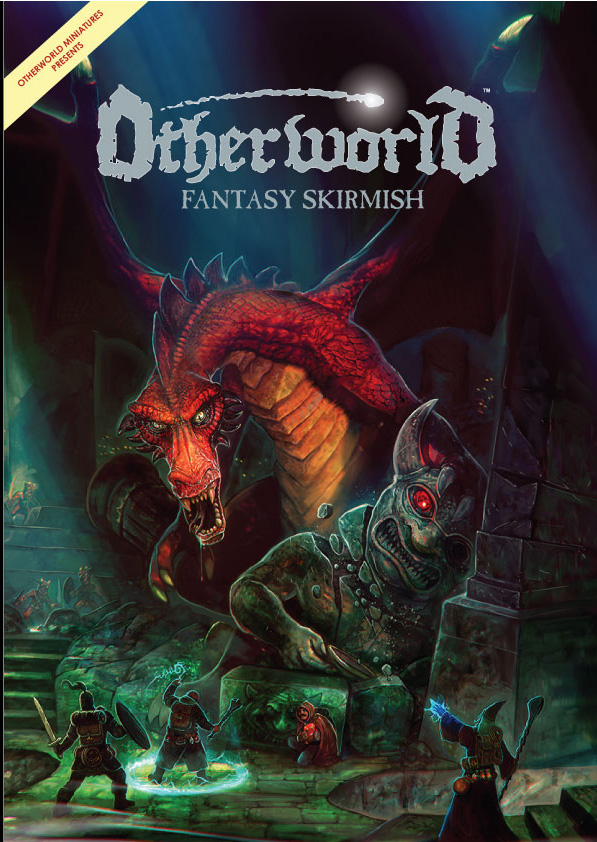
Review: Otherworld Fantasy Skirmish

Since the untimely demise this year of the Warhammer Fantasy setting, and thus the three decades of games that it spawned, one might have expected the edifice of fantasy wargaming to crumble away without its keystone to hold it together. After all, many (myself included) were introduced to fantasy gaming through Warhammer and would have never known roleplaying games or wargames without it. Even though Warhammer was itself first inspired by Dungeons & Dragons, it somehow became both unique and iconic of the gaming hobby, sporting a well defined aesthetic and ethos, a rich background setting that always came to the fore and largely consistent design principles (even between diverse spin-off games). In short, Warhammer was an institution and a tradition, which, although it had certainly evolved over time, evinced remarkable affinities to its earliest versions and indeed its earliest inspirations.

So recently I took it upon myself to survey the field after the solemn dirges for lost Warhammer had faded to a hush. I admit that I was a little surprised by the results. Instead of a dearth of fantasy games, I found the burnt remains of Warhammer had engendered the soft shoots of life to spring up, with many new games eager to grow out of the shadows of the votive offering of Warhammer Fantasy. In many cases, these games seemed to both honour the old and in many ways also break from tradition, particularly by trending towards quick and simple gameplay. While making appeals to Warhammer’s principle aesthetics and form, such games cut dramatically away from the crunch and complication for which Games Workshop has always been known (for those that missed it, the last edition of Warhammer Fantasy was as thick as a telephone book). In this way, Mantic Games’ Kings of War kept the rank and file troops but dropped the combat and casualties of individual models, just as Osprey’s Frostgrave kept the team-skirmish scale of Mordheim but entirely dropped the tables and charts for a simple 1d20 resolution system. While I appreciated the strong sense of aesthetic continuity with the past in each of these games, I also felt that the rules were too simplified, too streamlined to really harken the feeling of traditional games.

It therefore caught my eye when I came across Otherworld Fantasy Skirmish, the new game by the eponymous Otherworld Miniatures. If you are unfamiliar with the company, Otherworld has pride of place among miniature companies for manufacturing figures with an unabashedly “old school” style, so much so that their sculpts are perfect representations of the original AD&D Monster Manual drawings. Would Otherworld Miniatures’ obvious care and concern for old school aesthetics result in an even stronger sense of gaming tradition in this new ruleset?

Well, at first it was difficult to find out. Extremely difficult. In fact, so much so that I would level the charge at Otherworld Miniatures for poorly handling their own game. For example, the blurb on the Otherworld Miniatures website still advises that the rules will be due out on the 19th of August. (It is today December 27th.) More importantly, the company has released extremely few details about the actual inner workings of the game… no quick start rules, no rules explanations… not even a PDF preview. Likewise, the independent “reviews” so far available are of the noxious “right, got this game, had a go, was a bit of fun, yeah?” type that offer frustratingly little insight into the game itself. All of this was made especially difficult since the only places that sell the game are seemingly in the UK (although this may change in the future, one might think that four months is time enough to send the game over the pond to some American distributors). Worse still, there are hushed rumours in dark corners of the internet that one can purchase (if brave enough!) the game as a PDF, although this is not mentioned on the Otherworld website or their Facebook page. Indeed, one must rap the correct number of knocks on the door to “Gumroad.com,” a bizarre website that introduces itself as some strange combination of Etsy and Patreon. Again, there is no official endorsement of this website, so I suppose the PDF that I purchased from there was not actually sanctioned by Otherworld Miniatures, but by some petty thief with a stolen file and a dream.

Right, so enough complaining, what in the world is this game like?

Building your “Faction”
Otherworld Fantasy Skirmish (henceforth, “Otherworld”) is a skirmish wargame based on the action:engine system at the heart of Crooked Dice’s game 7th Voyage. You build a small “faction,” paying gold pieces for each warrior, who is described in game terms by abilities, attacks, special powers and seven stats (speed, defence, hits, strength, agility, intelligence and morale). There are three different levels of warriors, including legends, companions and minions. The former are the most powerful characters that lead your party, while companions are second-rate heroes and minions are simple followers (a distinction not dissimilar from Frostgrave’s wizards, apprentices and soldiers). Interestingly, you can build your army as you please, and while your warband is called a “faction” in the rules, there are no real “factions” here at all. Instead, the book gives you a long list of legends, companions and minions from which you may pick and choose freely, with only one small caveat: legends and companions both have alignments (good or evil) and you cannot mix alignments in the same party (minions have no alignments). Otherwise, there are no hard rules about faction composition or size. You could play a game with one model versus one or more enemies (one of the minion options includes a Dragon… I’ll let your imagination fill in the rest), or you could play with very large hordes. There is no maximum or minimum count for the three types of warriors (legends, companions and minions), so you could potentially create the backstory that your group of legends is lead by the Beholder (*ahem* Eye Tyrant) minion that is mind-controlling them. Or maybe by a lowly townsfolk mayor, who cannot fight well but is their rich employer? Or maybe you have a group of fresh-faced companions, out on their first adventure? Or maybe you just have a clan of troglodytes and leave it at that?


Each of the legends gets a full page with a line art illustration from the terrific Paul Gallagher; basic statistics, abilities and attacks; and a special power unique to their type. The “good” legends in the book are: Blessed Crusader (a paladin with the ability to heal and turn undead and demons), Daring Rogue (a thief who may pickpocket), Enigmatic Enchanter (a magic-user with an innate magic missile attack) and Valiant Warrior (a fighting-man who can attack all enemies within reach). The “evil” legends provided include: Callous Corsair (a rogue who may set traps), Immortal Fiend (a demon-possessed warlock who gets stronger when wounded and can flood the enemy’s mind with dark thoughts), Merciless Warlord (a berserker chief) and Sinister Sorcerer (a sorcerer that can injure himself to boost spells and may conjure a defensive barrier). Each of these legends has a base cost of 50 gold pieces (“gp”), which you may increase by either buying higher statistics (you also get an initial pool of 3 points to increase your statistics without cost), by boosting or buying new attacks (essentially weapon proficiencies) or by purchasing magic items. Oddly, the ability to purchase magic items is not granted; rather, you must take the magic item ability a number of times equal to the magic items you wish to purchase. Not every legend has this ability, but each legend may choose three extra abilities without cost when they are hired (and more abilities can be earned by taking “disadvantages”—a kind of negative ability which penalizes the character in some way). In total, a fully upgraded legend would probably be in the range of 70 to 80 gp.

Apprentices are, as you might expect, weaker heroes and cost a mere 25 gp each. They have the same options as legends, but they are generally fewer or weaker bonuses (for example, only two points for stat increases and two extra abilities). The good companions include Aspiring Acolyte, Brave Burglar, Wandering Minstrel and Wild Ranger, while the evil companions include Cruel Conjuror, Monstrous Myrmidon, Savage Slayer and Wretched Priest. Each has a special quality much like the legends, but generally weaker and more tuned towards a supporting role.

Minions are the lowest rank of warriors in your party and have the same sort of abilities, attacks and stats as legends and companions (most, but not all minions, lack special abilities). One minion in your faction can be upgraded to be a henchmen, which gives them a boost in stats and abilities to make them nearly as powerful as a companion. The list of minions is dizzying and includes (perhaps unsurprisingly) entries for seemingly every model produced by Otherworld Miniatures. Here you will find your classic hirelings, humanoids, beasts and dungeon vermin, monsters, undead, devils and demons. Regardless of whether your heroes are good or evil, you may cherry pick from this massive list to customize your warband. Otherworld also took a different approach to upgrading minions that gives them a unique feel—while legends and companions pay to upgrade their stats and abilities, minions pay to upgrade their equipment and type. The latter might include upgrading one of your Bugbears to be a chieftain or it might be upgrading your hill giant to a stone giant or your giant snake to a constrictor or a viper. Each upgrade allows you to tweak the feel of your warband without utterly transforming the unit types. With a total sixteen hero classes and seventy-four basic minion entries (almost all of which have further upgrade options), you do feel there is enough room to make an interesting warband (in comparison, Mordheim had 49 entries of henchmen and heroes, while Frostgrave has 15 soldiers and 10 wizard/apprentice types).


One last note is worth making about minions. Minions include both summoned/animated models as well as wandering monsters, both of which begin the game off-table until actions or events bring them into the game. The latter group are especially interesting, and include models that the defender (and only the defender) can bring into the game during a scenario and place near an “adventure token” (very similar to the treasure tokens that are the victory objectives in Frostgrave, but much more of a randomized event that could represent treasure, a trap or a wandering monster). This is a very clever mechanic that both simulates a dungeon delve in the middle of a competitive wargame, while also furnishing a potentially useful mechanic for a future campaign system (perhaps weaker warbands could compete against stronger ones by gaining free purchases of wandering monsters for the duration of the battle, much like inductions in Blood Bowl). Wandering monsters are a clever feature of the game that ooze theme, create a nasty surprise for a greedy opponent and open the door for future campaign play.

Playing the Game
The game plays out over a number of turns in which each player has the opportunity to act with some (but not all) of the models in their party. The turn sequence is simple, comprised of only four steps: determine initiative, first player acts, second player acts, resolve end-of-turn upkeep. Despite the derivative nature of the turn sequence, Otherworld does make a few interesting diversions from the customary wargame experience. For instance, the initiative roll (each player rolls a six-sided die and the player with the highest roll gets to act first) also doubles as a mechanism to determine fate points: little bonus tokens that are very useful to either boost die rolls (even after they are rolled) or purchase additional activations. Considering that all rolls in the game use six-sided dice, a +2 added after the roll for a couple of fate tokens is a pretty significant thing. The number of fate points available each round is the difference in the initiative rolls, split evenly between the two players (a slight advantage going to the winner here, as odds are rounded in his favor). Fate tokens provide an interesting way to make the game more dynamic and make things happen that might not have otherwise happened. That said, you usually will only have one or two of them and you can not bank them between turns.

In your action phase, you gain a number of activation tokens equal to half the number of your warriors on the table. Each activation token is first assigned to one model and then you may resolve two actions for each activated model in turn. It may seem odd that you can only activate half of your warband in any turn, but this does tend to create some tension and hard choices about what you want to accomplish in a round. There are also a few ways to get more activations, including the aforementioned option of spending two fate points for one extra activation (somewhat expensive, and you may want to keep your fate points to boost die rolls later on instead) as well as activating legends, companions and minions with the leader ability. When your models do act, they may take up to two actions, including moving, aiming, shooting, attacking in melee or performing some other, special action (such as casting a spell). They may even choose to take the same action twice, with the exception of shooting or aiming. In addition to this, there are a number of “free” actions that pop up at different places in the rules, including opening doors, dropping items and making a “free” attack of opportunity.

Models are free to move in any direction (with the usual penalties for terrain), although the final facing of a miniature is important for flank attacks and so on. Most models move a default of six inches, although some (such as the Ooze) are as slow as two inches while others (like the Purple Worm) move at a rapid eight inches per move action. If you move into contact with an enemy that was at least three inches away at the start of the activation, you are counted as charging and gain a “free” attack at -1 to hit (in addition to any normal attack you make with your second action). Other movement options include jumping, going prone, climbing, falling (!), swimming and dragging another model.

Most of the die rolls you will make during the action phase are either attacks or statistic tests, and this is where the game seems to take the most cues from Warhammer Fantasy or Mordheim. Each warrior has a number of attack options in their profile which correspond to different weapons (for example, the Hobgoblin has brawl 4+ and spear 4+, but may be upgraded to also have a bow 5+ or exchange the spear for an axe 4+). When you shoot or make a melee attack, you choose one of your weapon attacks and roll a die. If your roll is higher than the number in the profile, modified by a short list of ten situational modifiers and any status conditions on the model, then you hit (a result of “one” always fails, regardless of modifiers). If the hit is successful, you will roll for damage (unless a melee attack is used to force back or knock down the enemy instead). Damage is determined by a die roll on a chart that is functionally identical to the Warhammer Fantasy “to Wound” table. The default target is 4+ on a single die to inflict a point of damage (i.e., a wound), but this target is modified up or down for each point of difference between the attacker’s strength and the target’s defence (like Warhammer, bows and crossbows have their own strength value). If the damage roll is successful, the target loses one hit point and, if this was the last hit point, the model falls and will become a casualty if their hits are not restored by magic or other means before the end of the turn. Hits can be negated by certain abilities, including “equipment” abilities like light armour (6+ save), heavy armour (5+ save) or shield (6+ save alone, or +1 to other save rolls). Note that the vast majority of minions do not have access to the armour abilities.

Climbing, swimming, reading scrolls, testing morale and perhaps countless other odd situations call for a statistic tests. To make this test, you compare the relevant statistic (usually strength, agility, intelligence or morale… I could not find any tests for speed, defense or hits) to a table that is largely similar to the ranged “to Hit” table from Warhammer Fantasy. For example, if you have the rather average stat of 3, you need to roll a 4+ to succeed on the test. Opposed tests (such as breaking from melee with an enemy) can be made by each player rolling a die and adding the relative statistic (in this case, agility) with the highest roll winning. Much like Mordheim, morale tests are called for when a model is all alone, near a feared enemy or whenever your faction has lost half or more of its models. The latter test is only taken by the companion or legend with the highest morale in your party during the end phase, thus giving an edge to factions that include those warriors, and failure results in a dice roll of your models disappearing from the battle as they lose their bottle.

Finally, the magic system is also vaguely reminiscent of other games as well. To cast a spell, a model must take a special action and roll one or more of their casting dice (they have a number of these equal to their Magic ability rank, usually two or three at most). If the total, plus their Intelligence statistic, is greater than the casting difficulty number of the spell (these range from 8 to 16, with 10 being the most common value) then the spell is successful. If any die result shows a “one,” the magic user may not take any further actions that turn, as he is drained from the attempt. The odds of a successful casting might seem harsh, since even a legend-level spellcaster will only have Magic 1 and Intelligence 4 by default, but the odds can be improved by spending a special action to chant (+2 to the casting roll) and by using fate points. Even then, I think most wizards will allocate some of their free ability slots and even take a disadvantage or two in order to boost their Magic ability rank a few times. This is also significant, since you can only choose a number of spells equal to your Magic ability rank. Disappointingly, there are only a mere 18 spells to choose from, at least four of which have to do with summoning or banishing creatures (and are thus mechanically similar) and only one spell that actually does damage (although recall that the Enigmatic Enchanter has an innate magic-missile ability which does not require the magic rules to use).

Creating a Scenario
While you could simply plop the models on the table and have a brawl, Otherworld comes with six generic scenarios (or “encounters”) that you can play with little preparation, as well as an amusing “barroom brawl” introductory battle to learn the rules and three more narrative scenarios to showcase more story-driven gameplay. Each encounter describes an ideal setting, the deployment of the forces, victory conditions and any special rules that will be used. These rather typical scenarios include battle (essentially capture the flag), escape, race (a treasure hunt), skirmish, slay (an assassination mission) and steal. The potential of the scenarios, and the possibility to create homebrewed encounters, is greatly elevated by the use of adventure tokens and the adventure deck. Eight or more of the former are scattered about the battlefield by the defender and represent unknown prizes or perils. Only certain models in the attacker’s faction (those with the Treasure Hunter ability) can reveal and secure these tokens, and they must spend a special action to do so. Thirteen of the thirty-two adventure cards, or approximately four in ten, are devoted to wandering monsters, another four cards are traps (pit, spikes, swing log and poison), nine are treasure cards (essentially victory points) and the final six cards are split between attacker and defender special cards (which provide a one-time bonus when they are played). The latter are designed to be lighthearted “in-jokes” about roleplaying, but a few of them made me roll my eyes (“Chainmail Bikini,” for example). While the function of these cards is still fairly modest, the possibility for expansion they offer is appealing. For example, you could include one or more cards tied to certain events in a homebrewed scenario, or you could replace each treasure card with a random magic item card. A number of cards could be included to represent undead rising from their shallow graves to attack the nearest model regardless of whether they are the attacker or the defender. Perhaps some cards might represent the satchel charges that the attacker needs to gather to demolish the castle wall and end the siege. The room for development and expansion of this clever little rule will be very interesting for scenario and campaign designers.


Overall
Otherworld Fantasy Skirmish shows a lot of promise. The rules are simple but feature great room for customization and the developer has announced a manual of monsters supplement to expand the game further. (One can only hope that a full set of campaign rules are not far down the path as well.) The downsides to the game, at least for some, will be how much it derives from other games (such as Warhammer Fantasy). There is nothing particularly new in the attack and wound procedure, or even in the way morale or magic works. That said, there are some new ideas here, including the rules for activation and the adventure deck and tokens, and certainly the immediate familiarity will be a positive factor for many gamers. Even for new players, the core game is extremely simple and intuitive and can be picked up quickly. Because the core game mechanics are so simple, however, Otherworld adds detail by focusing on special rules… a lot of special rules. In fact, there are eighty four abilities to keep track of, six conditional statuses (dominated, immobilised, on fire, scared, stunned and weakened), twenty eight magic items and forty seven weapon and bestial attacks (with seventeen weapon effects). In this sense, the game is very much in the line of later Warhammer Fantasy games, where troops were largely distinguished from each other by their special rules. Unfortunately, by centering the most interesting mechanics of the game around special cases, a game of Otherworld will likely be an experience in page-flipping for a long time before the players acclimate to the rules.

The warband construction system, on the other hand, is both a blessing and a curse. By lacking a clear feeling for distinct factions, and by lacking a setting for the game, players may have a hard time getting interested in the game enough to invest in it. At the same time, the flexibility of the party building rules means that you have total access to everything in the game and are not restricted to playing one race or kingdom. You could have a motley group of good heroes who raise dead and keep company with ogre mages and a group of orcs. If you wanted something more believable, you could always just play a tribe of kobolds with a pet rust monster. This inherent flexibility leaves the burden on the player to create his own backstory, instead of selecting from a list of iconic forces within a clearly articulated fantasy world. Lastly, the latent creativity of the open faction design tools are hampered somewhat, as a player that chooses only minions is missing some key elements of any successful party, including the ability to take morale tests when casualties start to mount and, quite often, the Treasure Hunter ability which is required to access the significant adventure deck side of the game.

At the end of the day, Otherworld Fantasy Skirmish feels very much like a sandbox skirmish game. It is great if you have gobs of miscellaneous figures and can run it in a semi-competitive, semi-cooperative fashion with homemade scenarios and campaign play (although the latter is currently missing from the game, a good gamemaster could quickly cover the essentials). Ultimately, this is one of the funny things about the game. Otherworld is a wargame that is really begging for a gamemaster… it does not need it absolutely, but it feels like it works better with players trying to tell a story more than deploy a winning strategy. It is a game that lacks overt roleplay elements and yet feels more at home when they are restored. After all, if you are allowed to use the entire palette of creatures and heroes, and the game expects you to fill in the blanks and tweak the play experience to your liking, why not go all in and gambol in the narrative elements?

Despite the game's flaws (some of which are ironically also its strong points), Overworld Fantasy is worth a close look. It is a gorgeously illustrated and professionally laid out work, with beautiful line art flourishes from the unbeatable Zhu Bajie and characterful heroes from Paul Gallagher. While the rules are clear that you do not need them to play, Otherworld Miniatures are attractively displayed in action-packed diorama photos throughout the book and certainly provide plenty of inspiration for collecting and painting. The game looks to be well supported, with token, card and dice packs available now and new supplements on the horizons (including a reference to future "published encounters"). There is certainly plenty of room to expand, and the scant mention of using square grids instead of rulers to play (in order to take advantage of the Dwarven Forge terrain seen in several dioramas) suggests that Otherworld Fantasy Skirmish could become the new go-to game for Warhammer Quest fans. Will it overtake the other options out there, including the popular Frostgrave? For those who want more crunch and more options, it is perhaps already more suitable than Osprey's game. For the rest, it is worth waiting to see how the game is expanded in the near future.

Tuesday, May 7, 2013

The Border Fortress

After a grueling finals and end to a long semester, I am slowly reemerging in a Boston reformed by summer leaves and flowers. The transformation seemed to happen over night, with flowering trees blooming to fill the parks and pathways. As a reward to treat myself for a difficult year of study, I decided to conspicuously indulge in this:

Outer packaging of the 1988 Mighty Fortress set.

Now, I have heard everything from accolades praising the 1988 edition of Warhammer Siege to bitter complains about complexity. Certainly, no one claims it is a simple game—it is designed as a full expansion of the original Warhammer Fantasy Battle rules and features both the complete freedom of game mechanics for every imaginable situation as well as the extensive book keeping that this would require. With all of the detail, even though most of it is optional and modular, one can be forgiven for missing things, and I suspect that Warhammer Siege is a game you learn as you play: an experience that gets better with time.

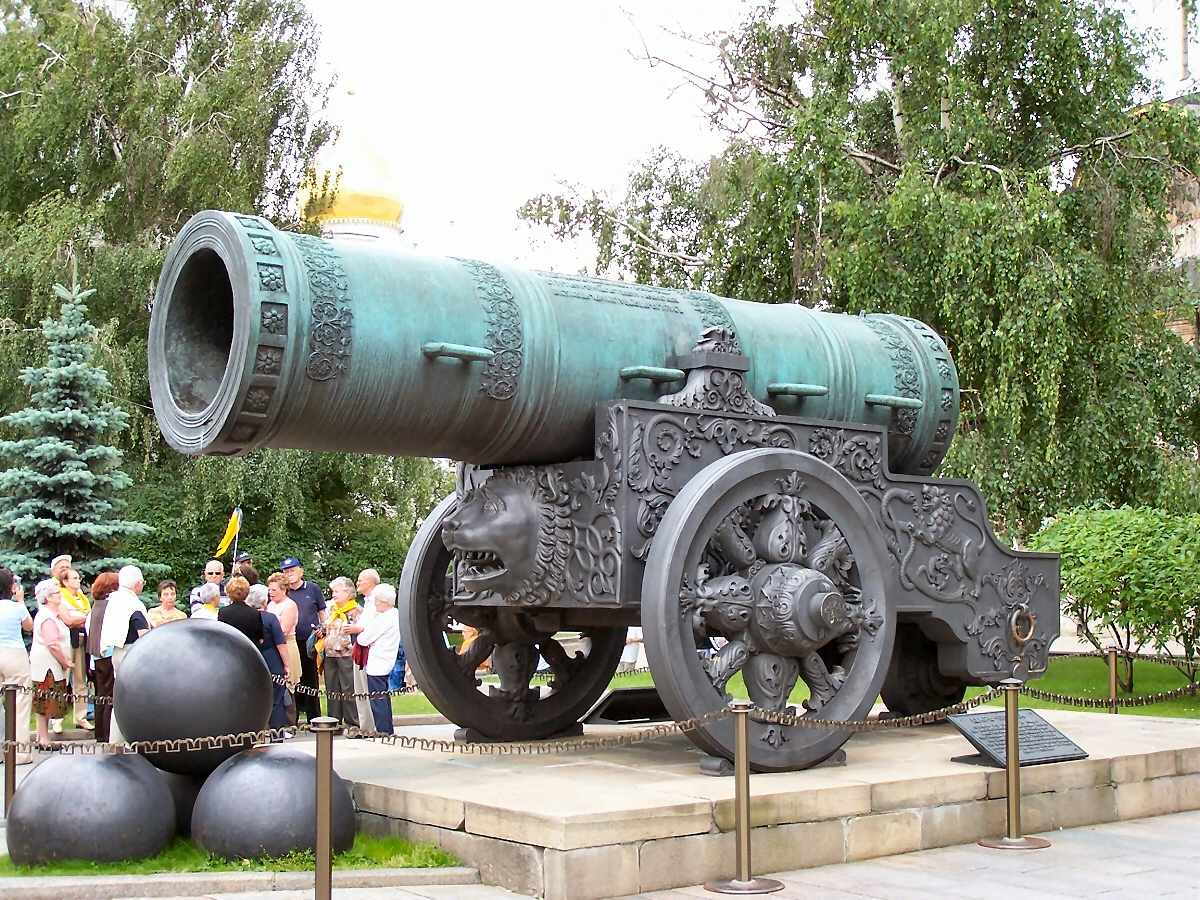
To be fair to Warhammer Siege, it is worth addressing seemingly the most common complaint: that artillery appears to quickly demolish the stronghold walls with little hope for the stalwart defenders. Many first time players have lamented their one and only experience with the game resulting in these catastrophic results. The underlying problem here seems to be the imprudent deployment of massive doomsday devices in the arsenal of the besiegers, particularly the 10-man siege weapons. These apocalypse weapons would have been equivalent to the historical Tsar Cannon or other medieval and Renaissance "super guns."

Complete contents.

The main problem here is that the default wall described in Warhammer Siege is for the lowly "border fortress"—a common, lesser castle often found in the Border Princes. These meager strongholds are cobbled together between the first few harsh winters on the frontier, when a would-be robber baron struggles to establish a foothold in the wilderness. With sparse resources and only unskilled labourers, those bandit kings who do not freeze to death in a half-completed castle before the frost subsides are only able to manage provisional, precarious fortifications to stake their claim. To the desperate outposts and colonies in the barrens, even these ramshackle fortresses are formidable symbols of frontier authority and power—at least until a new warlord arrives. Yet, in relation to these backwoods bulwarks, the most massive cannons in the history of the Old World are incomparable adversaries. The calibre of such ordnance would likely be as thick as the very walls of the border fortress. While such improbable batteries are designed to break down the mightiest citadels and bastions in the world, the lowly border fort hardly stands a chance against such awesome power.

The different plastic pieces—gate and two types of doors, trapdoors and ladders.

It is notable that the two previous siege games that reported disastrous results both explicitly lacked a critical component to any Warhammer Fantasy Battle game—the gamemaster. A decent referee would have readily spotted this incongruous matchup and adjusted the scenario to account for it. For example, a good competitor to a standard "border fortress" (which has a default 10 wounds or "defence points") would be the 5-man cannon (cannons are rated from the smallest 3-man culverin to the largest 10-man bombard). Such an artillery piece would chip away at a battlement and would cause a breach after 12 direct hits (several cannons working in conjunction would make even shorter work). A scenario featuring heavier ordnance would demand thicker walls, however. After all, as the Warhammer Siege rules suggest, the normal Toughness and defence point values "are standard for a typical Border Fortress," but "you may wish to vary this slightly" for mightier castles (Warhammer Siege, 35). Against a 10-man cannon, a gamemaster may increase the defence value of the walls to as high as 45 points, requiring an average of 4 successful hits to cause a breach.

All in all, Warhammer Siege has a lot to offer players who are looking for new kinds of scenarios to add depth to a campaign. It is worth exploring the true gems in this rules expansion, but I will leave that task to a later date. For now, I leave you with these photos to give you a sense of the scale and contents of the Mighty Fortress set. I found this item to be a great purchase—made from dense styrofoam sections that do not chip and can be rearranged into many different castle plans. Along with my recent find of a mint condition Warhammer Townscapes, I will have my hands full this summer building a complete Warhammer world for our local games.


Thursday, May 24, 2012

Review: Sailors of the Starless Sea

Sailors of the Starless Sea is the first adventure module available for purchase after the release of the Dungeon Crawl Classics Roleplaying Game. Starless Sea is meant to be an introductory adventure (for zero to 1st level characters), which showcases the different style of play promoted by DCC RPG.

The actual printed booklet is thin; only 18 pages, 13 of which comprise the actual text of the adventure (2 more pages are maps, 1 page of handouts, 1 page of full illustration and a 1 page flyer in the back for promoting the game). Noteably, only six of the thirteen pages of the adventure are full text, with the other two thirds of the book being rather lavishly illustrated in the moody style of Stefan Poag, Doug Kovacs, Jim Holloway and Russ Nicholson. This is good for inspiring the Judge and greatly adds to the art-value of the book, but a few of the pictures will be difficult to share with players as they share space with text.

The adventure itself is meant for 10-15 zero level characters, or a slightly smaller number of 1st level characters. For the uninitiatied, Dungeon Crawl Classics campaigns can optionally begin at zero level, where each player rolls up three to four poorly armed and equipped peasants. In a manner reminiscent of Warhammer Fantasy Roleplay, these would-be adventurers face a steep curve of natural selection, leaving only the strongest to advance on to first level after completing the first adventure. Although this method is optional, providing each player with multiple characters does a great job of achieving a number of things. First, it provides a learning curve for new players. Second, it allows you to get multiple chances to roll a great set of Ability Scores without compromising the "3d6 in order" mantra. Third, it adds a little bit of dark humour to the first game, which helps ease players into the campaign before there is a truly meaty plot for the players to sink their teeth into.

Without spoiling the story, the module launches the adventurers right into the action from the start. There is no detailed home base, and the adventure begins at the entrance of the dungeon with the presumption that the adventures will conquer it in a single expedition. Although there are parts that are indeed very deadly, there is a clever way to gain reinforcements during the crawl, and defeating the module in one go is certainly feasible for clever players. This last part is key, as there are monsters in the adventure that are almost certainly unbeatable and must be approached intelligently. There are enough clues on how to handle these "puzzle monsters," but overly brash parties will likely receive little more than a TPK for their trouble. These monsters are obvious and clearly horrifying enough, however, to not allow even the most jaded players to entertain the slightest hope of conventional victory.

The dungeon, an ancient Chaos Fortress, is detailed with intricate, three-dimensional maps that really come to life. Although there are relatively few rooms left in the crumbling pile, they are all varied enough to provide a really robust adventure. This seems to go directly against the OSR megadungeon mantra of "half of the rooms should be empty." Indeed, there is no grid of hallways and square chambers, and each encounter section of the fortress is its own mini-adventure, with excellent ambience, a unique story to tell and different challenges for the players. Its hard to esteem the maps enough, and Doug Kovacs has done an excellent job interplaying art and cartography to paint a vivid terrain in the reader's mind.

Like the encounter environs, each lurking monster is unique, with no recognizable enemies to be seen (I believe this may be one of Joseph Goodman's design goals with DCC RPG). The treasure is also novel and original, with no +1 short swords to be found. Each artefact comes with a history of who owned it previously and a description of what dangers lie in possessing such a powerful relic. Some treasure will be evident to the players, but inaccessible until they advance in power, meaning that the party may have to return to the fortress later on to secure these prizes (which is a nice touch, suggesting a "Return to the Starless Sea" session down the road).

The action in the module can only be described as high-octane. Unlike a normal low-level adventure where the players are stuck rescuing the local merchant from goblins, Starless Sea throws beginning adventurers into what feel like major events. Instead of relying on their ability (indeed, zero level characters have little), players must defeat high-level challenges with their wits (the puzzle monsters mentioned earlier being just one example of this). The end of the adventure leaves the players feeling that they have achieved larger than life things, although at a terrible cost, and creates an exciting opening for further adventure as the heroes are born away on perhaps the greatest prize and namesake of the module. There is also plenty of opportunites to draw long-term villains from the adventure, making the module a decent foundation for a larger plot.

For a dusty shelf price of $9.99 for the dead tree version ($6.99 for the PDF), and considering the amount of art in this module, it is hard to pass this by. The stats are generic enough to run the adventure with any OSR game, and (with a little editting for gore) Sailors of the Starless Sea would be an exciting introductory adventure for new players of any age. It is best used, however, to introduce players to DCC RPG, as (much like that tome) the contents are a very evocative old-school primer on how to bring that 1970's heavy metal ballad feel back to your gaming table.

Wednesday, April 18, 2012

Dwimmermount

Dwimmermount is a classic dungeon in every sense. The preview for backers of the Kickstarter has a first level that feels both formal and archetypal, yet also lavishly rich in atmosphere. There is a strange mixture of James' staid writing style and the moody ambience that quickly coalesces around the dungeon environs. His writing is effective, and creates a gloomy picture of a ruined hall, with walls and floors now too inert and mute to tell all of their stories.

As James' promises elsewhere, these rather mournful early hallways and chambers will eventually give way to something much stranger. From that discussion, and James' interest in planetary fiction, deeper levels will seemingly take a dip towards period science fiction with Burroughs et al. While it may be judging a book by its cover, from the early drafts I expect the resulting product wil be a well-woven and meticulous classical dungeon, full of ambience and character, with a few twists and turns towards the finale.

In that same discussion, James has expressed interest in using Dungeon Crawl Classics with Dwimmermount. While this is also my current game of choice, the more I read it, the less I am convinced that DCC is well suited by a megadungeon. One of the early design goals was that DCC was not D&D, and would not follow the same path that D&D took. DCC cleaves closer to pulp 1970's science fantasy literature, whereas Dungeons & Dragons became beholden to its wargaming roots. The dungeon is well designed for the later style of play, with gritty room-to-room warfare and strategic exploration and conquest of different zones.

In contrast, Dungeon Crawl Classics seems (perhaps ironically, given its name) better suited for episodic play typical of pulp novellas and the short stories found in the back of cheap science fantasy rags. DCC personas do not fight for every inch of ground with an army of henchmen, but rather they go on flashy capers, discover horrible secrets and fight gross-out final bosses.

This style is well supported by the panopoly of modules Goodman Games has lined up, but I am wondering how it would look for novice judges trying to prepare their own material. The approach I have been taking lately is similar to the method I used in an unpublished homespun roleplaying game a while back. I would build a somewhat self-contained locale (called a "setting") and come up with 2 to 6 major spots in the location (called "scenes"). Scenes were evocative locations where significant story encounters would occur (thus, extraordinary events would never happen in ordinary places, and vice versa). Different settings would be connected in a web geography according to how the narrator expected the plot to unfold (and later, redrawn according to how the plot would actually unfold). Settings themselves would be given brief and colourful descriptions, which would help the narrator improvise.

Thus, the city of Swampgut (setting) could be connected to Cairnlands (setting), which would be connected to Blagga's Hold (a setting, with the descriptors: "crumbling for centuries," "dry mud-walls," "red qwartz canyons," "ant-hole hallways" and "dry creekbed"). Once the characters beat a certain number of the scenes in Cairnlands, they could cross from Swampgut, through Cairnlands and to Blagga's Hold. The latter might have four scenes, including "last standing guard tower" (bird's eye view, crumbling steps, massive bonfire, Blagga's spy-falcons), "Blagga's Harem" (deep in the bowels of the fortress, eunuch guards, debauchery, brazen idol, Blagga's platform, poor acoustics), "black pit" (thousands of feet down, lightless warrens, lurking minotaur, sandy arena) and "master kitchen" (hundred cooks, strange meats, massive hearth, hanging pots and pans, chaos and clamor).

How the players interract with such a setting is freeform, and the judge is encouraged to briefly describe otherwise uninteresting travel. The characters could sneak around the creekbed, find a secret entrance in the wall, and creep through winding warren-like halways until they find a peephole that spies into the harem (ahem, to overhear the infamous Blagga's plans, of course). Once the players goals were sufficiently achieved (or failed), the setting would be expended and the story would advance. For settings that are pure obstacles (like the aformentioned Cairnlands), the narrator may require a certain number of scenes to be beaten to open up further settings.

This is a quick way to sketch out a basic map of the story, but it is still flexible to be modified on the fly. By focusing on dramatic moments and places, such a campaign would feel more pulpy and narrative, which can be scaled back according to the tone the judge would like to set. This approach de-emphasizes mapping, tracking of time and supplies, and the general inertia of traditional exploration. This does not provide an actual plot, however, and I hope to touch on a few tips for adventure design in the near future.

Sunday, April 8, 2012

The Classic Experience

As I mentioned previously, Dungeon Crawl Classics Roleplaying Game is posed to be the game of the OSR thus far. But this a tall claim, isn't it? Aren't rules, after all, just rules? Indeed, from first glance, DCC shares all the major tropes found in early editions of the Dungeons & Dragons game. What makes DCC so significant?

While the rules take up the least space in the book, and appear to be broadly descended from traditional Dungeons & Dragons, the differences are subtle and nuanced. Importantly, these new rules require an open mind, as DCC is not merely a distillation of the games that have preceeded it. It is not the perfection of past attempts, or a fine-tuning of a well-worn concept. There is a new theory behind this game which takes us back to the moment we first cracked open the Basic Dungeons & Dragons box as kids and peered in with wonder.

Of course, as we know, D&D developed on a course predestined by its wargaming roots. Chainmail was a set of medieval warfare rules, and the later iterations of D&D that it inspired focused increasingly on characters, combat roles and abilities. In a way, this even sort of made sense; the most memorable aspect of fantasy literature remained the characters, who then became more and more the sole focus of fantasy games. But there is another moment, a spark, that this timeline has long since left behind. This spark lies at the heart of our first roleplaying experience, when we still did not understand D&D fully, and the oceans of our imagination, buoyed by a ravenous diet of novels and art, met with the first shores of a gaming system. There was a tremendous amount of promise in that moment, precisely when we rolled our first strangely-shaped polyhedral, craned over to see the result and thought, "well, what does THAT mean for my character?"

And this moment is precisely where the Dungeon Crawl Classics Roleplaying Game departs from Dungeons & Dragons. While the later focused increasingly on providing easy and clear answers to dice results, DCC harnesses the interpretive moment of the die roll for asking more questions and creating more difficult situations. The use of dice throughout the game creates dots, which players are then inspired to connect according to their experiences. The die roll is always a negotiation, never a prescription, and demands engagement.

A great example of this can be seen in DCC's rules for Mighty Deeds. Warriors lack an attack bonus, and instead get an ascending bonus die that adds to attack and damage. Additionally, warriors are encouraged to describe their maneuvers, tactics and tricks with each attack. The result of the bonus die determines how successful this feat was, challenging the players to rethink how they can best defeat a powerful enemy.

At the same time, the use of dice in DCC tends to create, rather than resolve, conflicts. Wizards must bargain with their patron daemons, and choices always suggest future challenges. On the Goodman Games fora, there has already been at least one story of the dice being read as transforming a character into a greater daemon.

The end result is a little game that packs a lot of punch, with dice rolls that bring up questions instead of providing answers. The kinds of questions that come up in a regular game feed directly from the inspirational literature of Appendix N, giving Dungeon Crawl Classics consistent atmosphere that any swords and sorcery fan can enjoy. Armed with Vornheim, The Random Esoteric Creature Generator and Dungeon Crawl Classics, a referee might feel young again.

Wednesday, April 4, 2012

Crawling Back

After a brief personal hiatus into none of your beeswax, Joseph Goodman's stunning Dungeon Crawl Classics Roleplaying Game has pulled me kicking, screaming and crawling back into the collective imaginings of pulp science-fantasy tales. While the paper edition of this significant work is enough to earn it a worthy place in every bookshelf and collection, with gorgeous art and design from the maker's of The Dungeon Alphabet, the real contribution of this manual to the "Old School Renaissance" is much more fundamental.

We have already seen revolutionary additions to the literature of this reborn hobby. Not only the aforementioned Dungeon Alphabet, but The Random Esoteric Creature Generator and Vornheim have been billed as new ways to imagine a game of Dungeons & Dragons. Instead of providing new variants to an old paradigm, these publications emerged from the fog of our expectations like strange, inexplicable time travelers from another dimension. They were built upon entirely different theory, as if the original game had never been the illegitimate child of generic, colourless wargaming rules and colourful but unruly fantasy literature. They naturally and effortlessly wove story and system, form and function. But these were always partial additions, covering not the basics of play, but only peripheral subjects. There was no foundational text yet.

Of course, it was only natural that the majority of the OSR would follow a much more conservative trajectory. Just like the historical Renaissance in Europe, the movement began as a return to classical form and style. Considering the timeline, the early OSR began merely with an attempt to emulate generic, vanilla fantasy D&D, with HackMaster (2001), Castles & Crusades (2004), OSRIC (2006), Basic Fantasy RPG (2006), Labyrinth Lord (2007) and Swords & Wizardry (2008).

After 4e was released in 2008, the direction of new OSR games and supplements shifted dramatically, and the community really began to focus on alternate directions that D&D could have taken (both thematically and mechanically). There was a strong urge to go back to the literature genres that inspired the original game (particularly Lovecraft and Howard). Just take a look at the slew of Cthulhu & Conan games after 2008: Barbarians of Lemuria (2008), Supplement V: Carcosa (2008), Lamentations of the Flame Princess (2010), Realms of Crawling Chaos (2011), Crypts & Things (2011), Adventurer, Conqueror, King (2012) and Astonishing Swordsmen & Sorcerers of Hyperborea (2012?).

Joseph Goodman's Dungeon Crawl Classics Roleplaying Game builds on these, but significantly is not based on them. Although the drive to discover "the D&D that never was" after the advent of 4e is not unique, the vision of DCC is not a new, even alternative, edition of the Dungeons & Dragons game. It is not the next version of D&D; if anything it is Arduin, it is Encounter Critical in comparison. It is a fundamental and core shift in our understanding of the horizons of collective fantasy storytelling, which weaves dark, trippy and weird tales natively with supporting game mechanics that actually suggest the play promised by the famed "Appendix N". Like the historical Renaissance, this unlikely and unpredicted development is the product of the renaissance coming to full term and finally bearing forth a truly originary work.

Will everyone "get" Dungeon Crawl Classics? Certainly no more than those who saw the value of The Dungeon Alphabet and similar publications. Nevertheless, DCC is significant in that it is the first offering of a core rules that is based on a new theory of the relationship between story and system. While this game is really at its best when producing pure Appendix N action, some will inevitably miss out and simply use it to play the same type of game they have been running for decades. They may even wonder why their Wizard has to make tough choices and dangerous allies, or why their Cleric has to sacrifice to his idol deity or fear the machinations of the gods, or why their Fighter has to actually think carefully and cleverly about how to engage an enemy, or how their Thief seems to have the knack to miraculously pull off any feat at the last moment.

Is DCC really that good? For the casual gamer, it is a wealth of inspiration and ideas that will not disappoint. For those that learn to play it on its own terms, and to let the inspirational fantasy literature and music of that era take the imagination away, the Dungeon Crawl Classics Roleplaying Game is nothing less than the game of the OSR thus far.

Tuesday, February 9, 2010

Yggsburgh: The Ur-Setting

"What if Greyhawk looked differently?"  It's a good question.  From very early on, Greyhawk accumulated a very specific feel.  The first official appearance of the setting came indirectly through the Greyhawk supplement for Original Dungeons & Dragons.  Although Supplement I was little more than a collection of new rules derived from Gary's home campaign, Greyhawk added equal parts of grit and weird to the white box, with more detailed characters and combat and a new range of bizarre monsters that changed the atmosphere of the game.


Notably, the distinction between Hero and Anti-Hero made in Chainmail began to blur with the addition of Thieves in Greyhawk, while the presence of Paladins effectively dethroned the previous depiction of the knightly Fighting Man, transforming the latter into the obscure mercenary of later editions.  The presence of both of these new classes asked new questions about the nature of questing.  At the same time, Supplement I began to change the mechanical dynamics of the adventure.  Instead of re-rolling Hit Dice every level (and thus assuring all heroes had plenty of hits by high level), a new system was introduced where a Hit Die was merely added to the previous rolls every level.  To make things even more lethal, damage from monsters and weapons was increased across the board.  The seemingly rapid rate of heroic character advancement was also severely curbed, with early foes being worth a tenth the experience that they were previously, and combat experience being much more explicitly tied to "slaying" the monsters, instead of merely defeating them.


Compared to the more traditional fare of monsters in the original three booklets (largely a mix of Tolkien and European mythology), Supplement I added a slew of outrĂ© creatures.  Monsters like the Beholder, Rust Monster, Carrion Crawler and Gelatinous Cube not only gave the setting a very specific ambience, but mechanically changed how the game world was imagined - turning the game into a survival horror where the knight in shining armour no longer had the advantage.


As TSR sought to shore up an official setting to capitalize on the early success of Dungeons & Dragons, the Advanced game would see Greyhawk's world greatly expanded and fleshed out.  We are all familiar with that history, I think, so I would like to turn instead to a Greyhawk that perhaps once was, even if for only the briefest period: a lingering aesthetic of which is still evident on the cover of the World of Greyhawk boxed set.  Ironically, this process involves peeling back Gary's own accumulated motifs to try and uncover what the Lake Geneva campaign may have looked like in the very beginning, before the effects of play made it more of a conceptually inhabited world.  This ur-setting, I would argue, made a little known resurgence in Gary's final codex, the Yggsburgh Campaign Setting, which was a real attempt to start the clock again and see where we would go this time.


Published by Troll Lord Games for the abortive Castle Zagyg series, Gary's Yggsburgh setting was pointedly different than his other post-TSR world, Lejendary Earth.  Within the 256 page hardback of Volume 1: Yggsburgh was really nothing new, at least at first glance.  The Free Town of Yggsburgh and the East Mark are described as a fairly conventional early-Renaissance backdrop, complete with a lightweight but reasonable history, economy and (human dominant) culture.  Within the city, there are many colorful characters and a fair amount of intrigue and politics, but generally this framework is very light and flexible, as if to leave plenty of space for the referee and players.


Outside the city walls is the East Mark, a relatively small territory that is otherwise not established in any specific world.  The environs around Yggsburgh have been often noted as the quintessential sandbox, and the map hexes are well stocked with five dozen geographic locales and countless adventure hooks.  Importantly, many of the encounters the heroes will come across while wandering the map are straight from the pages of classic Arthurian fantasy.  Not to give too much away, but there are trolls under bridges, damsels in distress, giants stealing cows, armoured knights, witches' curses, bandits, rebellions and war.


This is not to say that Yggsburgh doesn't have its spots of weird, but in general these do not impose themselves on a setting that is otherwise steeped in chivalry and knight errantry.  Similarly, the setting itself, thanks to Gary's light and playful presentation as well as the intuitiveness of classic fantasy, does not foist itself upon and burden the players or referee.  Instead, Yggsburgh becomes the ideal backdrop for the readers own imagination, with only the most primal diegesis at the ground level of our fantasy imaginations.


In the end, everyone's Greyhawk is different.  Yet, to achieve the sundry interpretations of Greyhawk, all referees start from a shared foundation, a foundation which, from very early on in Greyhawk's history, started to accumulate more and more direction.  I think Yggsburgh was an effort in part to undo this, to free up our originary fantasy imaginations with a light, classic Arthurian world of romantic European mythology and literature - something at the sedimentary level of the Western poetic.  My only defense against the charge of promoting "vanilla fantasy" is this provocation: Try it.  There is something deeply satisfying and liberating about working from the loose tapestry of a group's collective consciousness of fantasy literature.

Tuesday, January 26, 2010

REVIEW: Advanced Edition Companion

Admittedly, you could say my understanding of Advanced Dungeons & Dragons is pretty limited.  In fact, I was born a decade after the original game and, while I was certainly aware of D&D by the late 90's, my roots in this hobby are more accurately located in the early computer adventures like Zork et al.  Yet text-based adventure games and roleplaying share a common ancestry in Gygax and Arneson, and I came to the "old school" editions years later, drawn in by games like HackMaster and communities like Dragonsfoot.org.

One of the core principles of those original "old school" games, in contrast with modern game design, is that the rules are unapologetically suffused a certain implied setting, but are not sacrosanct.  Indeed, if the original Dungeons & Dragons game was unambiguous in anything, it was clear in its demand for immediate renovation and construction.  The "retro-clone" games, modern offerings that emulate these classics, have by and large done a good job at achieving the sense of an implied setting, but only fairly recent offerings have demanded referees to step out of the bounds of the written word to construct his own gaming bricolage (Swords & Wizardry WhiteBox deserves this honour).  Advanced Edition Companion, from Goblinoid Games, completes a trilogy of retro-clone games (including Labyrinth Lord and Original Edition Characters) that realizes a fundamental truth of those original campaigns from the early 80's: no one plays with just one set of rules.  Instead, campaigns were more often then not a mad mix of Basic D&D, "three little books" and a couple of odd AD&D hardbacks.  I, for one, am excited to see parties of Level 3 Elves and Half-Orc Assassins adventuring together again.

Advanced Edition Companion offers 153 pages of new options for your Labyrinth Lord game.  There are 7 races, 10 classes, 56 pages of spells, 17 pages of new magic items, 37 pages of new monsters as well as a slew of other new rules options and random tables to make your game a little more "advanced."  While Labyrinth Lord emulates Moldvay and Cook's Basic D&D, with its clean, consistent and simple system, Advanced Edition Companion portrays the heady days of Gygax's Advanced Dungeons & Dragons 1st Edition.  While these games were never fundamentally very different, the aporia at the heart of this combination has always been the varying levels of power between the two systems.  In the early days, this was bridged by sheer enthusiasm (and lack of other options).  Goblinoid Games has done an excellent job bringing this new supplement (along with the previous Original Edition Characters) into balance with the core rules, allowing referees to turn the detail "up" towards Gygax's AD&D or "down" towards Arneson's OD&D without ever having to worry about parity.


Of, the 7 new races, 4 are familiar and 3 (Half-Elves, Half-Orcs and Gnomes) are new to Labyrinth Lord.  All have been drawn up with the requirements, ability modifiers, minimums, maximums and racial abilities and class modifiers familiar to anyone with the "demon cover" book.  Similarly, 4 classes return while 6 are new (Assassins, Druids, Illusionists, Monks, Paladins and Rangers).  Again, all have been tweaked to match their "advanced" lineage.  The experience tables and hit dice are all perfectly consistent with Labyrinth Lord, although there is even a special option for "advanced" hit dice to bring all your characters up to the strength of the advanced game.  Among these rules, you also find optional rules for multi-classing, random age, weight and height, "advanced"alignment, secondary skills as well as some informative notes for comparing OEC, classic LL and AEC classes.  To match the new classes, the ability tables have been expanded to cover new ground (including "Spell Learning Probability" for high Intelligence and "Survive Resurrection" percentage for high Constitution).


The new spell section is divided into Cleric, Druid, Illusionist and Magic-User (high level Rangers cast from the Druid and Magic-User lists, while Paladins can eventually cast from the Cleric list).  I count over 200 new spells (approximately 80 new Magic-User spells, 60 new Druid spells, 50 new Illusionist spells and 20 new Cleric spells), which are basically drawn straight from AD&D and its supplements.


The monster section details nearly 200 new monsters, again drawn from the Advanced Dungeons & Dragons corpus.  In particular, the classic demon types are represented, as are devils and demon lords, with an impressive amount of new art.  Orcus is here, with his wand, as are other AD&D classics such as the Beholder (ahem, the "Eye of Terror," I mean) and Otyugh.  I am happy to see that many of these entries have been updated with some subtle new tricks to keep your players on their toes, while largely retaining their old feel; perfect for new and old gamers alike.


There are about 120 new magic items, with tables that incorporate all of the classic "B/X" magic items from Labyrinth Lord with the new material.  With the monster and magic item sections, I appreciate how Goblinoid Games was careful to key entries that were new to AEC, to distinguish from those that could be found in the original LL rulebook.  The new items are seemingly drawn from the original sources without many differences, although it is nice to have the random item tables from different games brought together in one handy reference.


Aside from these main sections of Advanced Edition Companion (including the obligatory equipment section), it's hard to overstate the usefulness of the sundry minor rules options spread throughout this book.  There is an excellent discussion on monster habitat densities and lair encounters, a plethora of new combat options (covering helmets, parrying, subdual damage, two-weapon fighting, magical stunning and paralysis, and a detailed treatment on poison), new rules for adventuring in the underworld (including infravision, ultravision, chances to notice invisible enemies, potion mixing tables and a useful table on humanoid spell casters).  There is a detailed discussion on cosmology (including the different planes of existence), as well as a very useful sampling of random tables (random tavern patrons, dungeon furnishings, traps, atmospheric effects like sights and sounds, miscellaneous room features and contents as well as a more detailed treatment of laboratories and torture chambers).


Overall, I think Advanced Edition Companion is a great success.  This supplement really expands the horizons of the already considerable Labyrinth Lord game, bringing the "advanced" feel to arguably the most popular retro-clone game on the market.  Furthermore, by allowing players and referee alike to mix options to suit their taste, Advanced Edition Companion pioneers new ground in reincarnating the exciting days of early 1980's gaming.  The biggest advantage here, however, is the simultaneous appeal to fans of three traditionally disparate editions of Dungeons & Dragons (Original, Basic and Advanced).  With the core game and now two supplements being built off the same solid foundation, referees can now host many different players, play styles and interests without slowing down the game one bit, allowing for even more players at the table.


Score: 1-5 on a d6 (Excellent)

LinkWithin

Related Posts Plugin for WordPress, Blogger...