Tuesday, May 7, 2013

The Border Fortress

After a grueling finals and end to a long semester, I am slowly reemerging in a Boston reformed by summer leaves and flowers. The transformation seemed to happen over night, with flowering trees blooming to fill the parks and pathways. As a reward to treat myself for a difficult year of study, I decided to conspicuously indulge in this:

Outer packaging of the 1988 Mighty Fortress set.

Now, I have heard everything from accolades praising the 1988 edition of Warhammer Siege to bitter complains about complexity. Certainly, no one claims it is a simple game—it is designed as a full expansion of the original Warhammer Fantasy Battle rules and features both the complete freedom of game mechanics for every imaginable situation as well as the extensive book keeping that this would require. With all of the detail, even though most of it is optional and modular, one can be forgiven for missing things, and I suspect that Warhammer Siege is a game you learn as you play: an experience that gets better with time.

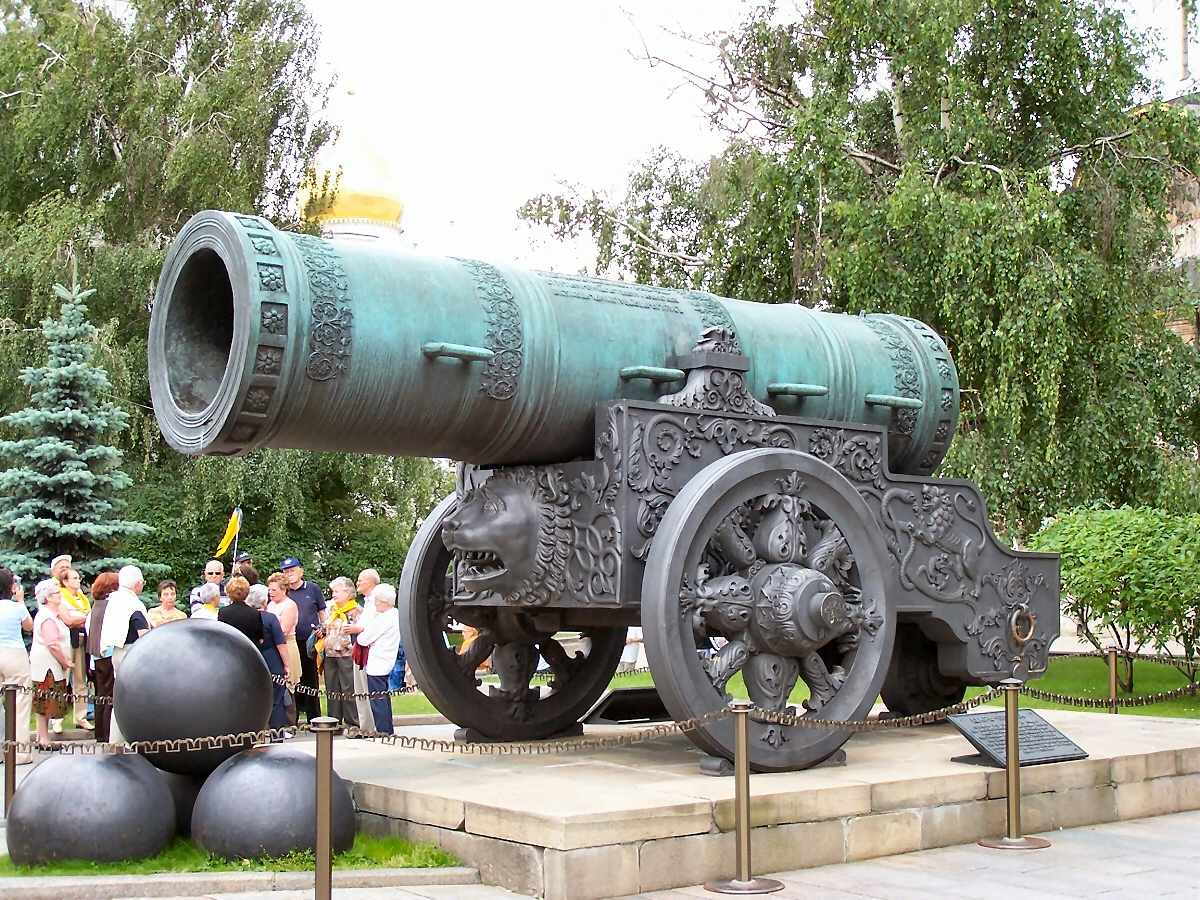
To be fair to Warhammer Siege, it is worth addressing seemingly the most common complaint: that artillery appears to quickly demolish the stronghold walls with little hope for the stalwart defenders. Many first time players have lamented their one and only experience with the game resulting in these catastrophic results. The underlying problem here seems to be the imprudent deployment of massive doomsday devices in the arsenal of the besiegers, particularly the 10-man siege weapons. These apocalypse weapons would have been equivalent to the historical Tsar Cannon or other medieval and Renaissance "super guns."

Complete contents.

The main problem here is that the default wall described in Warhammer Siege is for the lowly "border fortress"—a common, lesser castle often found in the Border Princes. These meager strongholds are cobbled together between the first few harsh winters on the frontier, when a would-be robber baron struggles to establish a foothold in the wilderness. With sparse resources and only unskilled labourers, those bandit kings who do not freeze to death in a half-completed castle before the frost subsides are only able to manage provisional, precarious fortifications to stake their claim. To the desperate outposts and colonies in the barrens, even these ramshackle fortresses are formidable symbols of frontier authority and power—at least until a new warlord arrives. Yet, in relation to these backwoods bulwarks, the most massive cannons in the history of the Old World are incomparable adversaries. The calibre of such ordnance would likely be as thick as the very walls of the border fortress. While such improbable batteries are designed to break down the mightiest citadels and bastions in the world, the lowly border fort hardly stands a chance against such awesome power.

The different plastic pieces—gate and two types of doors, trapdoors and ladders.

It is notable that the two previous siege games that reported disastrous results both explicitly lacked a critical component to any Warhammer Fantasy Battle game—the gamemaster. A decent referee would have readily spotted this incongruous matchup and adjusted the scenario to account for it. For example, a good competitor to a standard "border fortress" (which has a default 10 wounds or "defence points") would be the 5-man cannon (cannons are rated from the smallest 3-man culverin to the largest 10-man bombard). Such an artillery piece would chip away at a battlement and would cause a breach after 12 direct hits (several cannons working in conjunction would make even shorter work). A scenario featuring heavier ordnance would demand thicker walls, however. After all, as the Warhammer Siege rules suggest, the normal Toughness and defence point values "are standard for a typical Border Fortress," but "you may wish to vary this slightly" for mightier castles (Warhammer Siege, 35). Against a 10-man cannon, a gamemaster may increase the defence value of the walls to as high as 45 points, requiring an average of 4 successful hits to cause a breach.

All in all, Warhammer Siege has a lot to offer players who are looking for new kinds of scenarios to add depth to a campaign. It is worth exploring the true gems in this rules expansion, but I will leave that task to a later date. For now, I leave you with these photos to give you a sense of the scale and contents of the Mighty Fortress set. I found this item to be a great purchase—made from dense styrofoam sections that do not chip and can be rearranged into many different castle plans. Along with my recent find of a mint condition Warhammer Townscapes, I will have my hands full this summer building a complete Warhammer world for our local games.


Wednesday, March 20, 2013

Dynamic Combat in Warhammer

As my recent article on lethality creep suggests, and as Gaj's ongoing dramatic battle miniseries evidences, Oldhammer battles often consist of a gritty back-and-forth slugfest of smashing skulls and splintering armour. When the enemy is driven to rout by the press of steel, a friendly regiment can always swoop in, flying the banner to steady their nerves and rally them to return to the fight. Indeed, rallying and returning to seek vengeance on their adversaries is a frequent occurrence on the Oldhammer battlefields.

While this grit and gore is no doubt part of what makes the Oldhammer experience so unique, with every sword strike keeping you at the edge of your seat and each slain foe a small victory, the difficult odds of overcoming an enemy warrior may seem to produce a mêlée that is very static. Certainly, compared to the boosted lethality of later editions, fewer warriors fall to the swath of swords each round and each lost combatant means one less retaliation. So, when every blow counts, what keeps these gritty back-and-forth slugfests so dynamic? The difficulty in overcoming an enemy means that it is certainly feasible that a round of mêlée produces no casualties. Are there still interesting and tactical choices to make, even when the dice turn their back on you? Let's take a look at a few rules in Warhammer Fantasy Battle 3rd Edition to explore the options:

I Challenge You!
No doubt a mainstay of many Warhammer games, the challenge between opposing champions is a dramatic and stirring event. There is inherent risk and uncertainty associated with challenges, as the player is often stepping into the unknown and likely does not know exactly what he is getting into. Is that merely a regiment leader, or a major hero? Are their dangerous magical weapons involved? As models in Oldhammer can only wound adjacent base to base enemies, a powerful combat character is very much wasted on fighting mere fodder, and is best employed for more heroic tasks, including monster slaying and challenges. Matched with a fitting opponent, the warrior hero comes into his own. Refusing a challenge, on the other hand, will cause a cowardly champion to shrink back into the rear ranks and lose all respect he had earned from his regiment. The enemy is then given the chance to cut through the regiment in search of the abject and craven champion hiding amongst the fallen comrades. Challenges allow a hero to contribute more towards the combat results than from regular fighting, particularly against opponents with multiple wounds, and represent an interesting and fun sub-game of pitting your magical weapons and skills against the opponent.

Seize Their Banner!
The regiment standard is a symbol of the regiment's pride and origins. Unlike the aesthetic promoted in later versions of Warhammer, the diverse banners found in old dioramas seem to indicate that each unit is not only a separate component of the army, but comes from a different region, has a different background and perhaps even a different culture. While Newhammer armies tend to have a unified colour scheme of one or two tones that gives the army a general sense of uniformity, Oldhammer regiments are heterogenous, as found in the diversity of their banners which have a lot of individual character and personality. Seizing the enemy's standard is capturing the symbol of their mettle and everything they are fighting for, whether hearth and home or gold and glory. In combat, the regiment standard bobs up and down with the fray, acting as a beacon to summon the regiment's courage and compelling them to make a stand. The rules for capturing the enemy standard in Warhammer 3rd Edition are thus quite exciting and action-packed, as a regiment will fight tooth and bone to retain their icon in the mad scramble for the banner. In game terms, the death of the standard bearer (which is unfortunately fairly common, as the poor fellow has to stand in the front rank) means that the enemy may make a dive to the trodden mud to recover the fallen banner. The result is an immediate second round of combat (literally doubling the action for the round), which could end in the regiment retrieving its colours and chasing off the dismayed enemy, the pennant being crushed into the turf and lost in the confusion or the enemy capturing the standard and sending the regiment to flight (earning a slaughter of free strikes as they rout). A regiment that has lost its standard will remain sullen and demoralized for the rest of the battle, significantly increasing their penchant to retire from the battlefield.

Push Them Back!
Of course, battles can always be won even without causing excess casualties. All things equal, a regiment that has momentum, either carrying forward the impact of a charge or seizing impetus from the changing tides of previous rounds of combat, will overcome their foes. When this happens, the enemy is forced to step back under the press of steel and is forced backwards two inches. While this may not seem like a significant parcel of the battlefield, gaining ground incrementally allows the attacker much more maneuvering room for supporting regiments in the rear while further constraining and compacting the enemy position. Furthermore, while outflanking a phalanx can be extremely difficult, as the battle line is both very wide and is often flanked by powerful cavalry to intercept the enemy maneuver, pushing back the enemy center offers a critical strategy to breaking up stalwart battle lines. After a turn or two of pressing the enemy regiment to give ground, the attacker will have inflicted the quarter unit strength of casualties needed to force a rout test. When the enemy is put to flight, the attacker is now usually four inches deep into enemy lines and, restraining pursuit, is perfectly situated to immediately reform and charge directly into the flank of a central column of the enemy battle line. Needless to say, the resulting panic test can unfold the entire formation. When fighting regiments in isolation of a larger military formation, pushing back also provides other tactical choices. Should the victors leave their trenches to chase off the enemy for good? Should the winning regiment lose some of its cohesion to surround and mob the losers? Are there advantages to expanding the frontage, or would it be better to retain a rank bonus? All of these questions depend on battlefield conditions and can make for interesting decisions for the player.

As we have seen, even with the gritty and uncompromising combat of Oldhammer, there can still be compelling tactical decisions for the player when the dice fail. Exploring all of the options in Oldhammer combat truly helps provide for a dynamic and immersive experience, hearkening back to the roleplaying roots of the game. Importantly, these details allow combat to remain bloody even if it is tough fought, without artificially boosting mêlée lethality to spiral out of control and ultimately devalue the individual dice rolls into a sort of game of statistics and averages. The current tournament atmosphere of more recent editions of Warhammer is a testament to these latter-day changes to the structure of the game, where buckets of dice replace strategic thinking and certain "army builds" are presumed to reign over other, inferior ones. By taking serious the full body of game mechanics in older editions, sometimes dismissed as unnecessary and overly complicated "crunch," there are certain avenues to inject narrative and choice back into a game that some may feel has become entirely too determinate and therefore too prescriptive in its playstyle.

Sunday, March 17, 2013

Designing a Battlefield

There has been a lot of good buzz lately on designing scenarios and dioramas to push the Oldhammer ethos into new environs and player communities. Orlygg has offered a very good analysis of "old-style" and "new-style" wargaming tables, following up on Nico's unearthing of early Warhammer tables from the mid-1980's. The contrast between the old and the new, to my eye, is very reminiscent of nearly canonical theory of "combat as sport vs. combat as war" between past and present versions of Dungeons & Dragons. Wargaming tables from the past are covered with interesting and detailed terrain, and there is little difference between a historical wargaming table and a fantasy one. The goal of these battlefields is simulation. Modern tables simply feature a relatively flat plane with obstacles sprinkled evenly across it. In the latter, terrain "pieces" are discrete and atomized elements that have clearly delineated boundaries, set in a "neutral zone" of open ground. The goal of modern tables is to present a "balanced" playing field to compete with opposing army "builds." The former, traditional, table design is much more organic, with terrain blending together in uneven and visually impressive ways.

This got me thinking, how should an intrepid would-be Oldhammerer like myself go about building a proper "old-school" Warhammer table? Even more pressing, what does immersive battlefield design entail? For the former, I have decided that I am officially opposed to modular table design, despite some extremely impressive entries into that genre. I had come to the decision that an old-school board really needs more loving attention than a random layout could possibly provide. Rather, a good table rested on the latter—on proper battlefield design, so that I began to think about what a battlefield geography should do for a game.

This is not to say, of course, that a big open battlefield is to be avoided. Indeed, this sort of battlefield design allows for nice long battle lines to form up, which are visually impressive and can make for a fun game as the hordes crash into each other and force their way through the ranks. While this is one style of game, interspersing terrain settings throughout the battlefield will break up such tactics and allow for other play styles. What should be avoided, I feel, is treating the battlefield as a mere obstacle course, where terrain features are lone particles flecked onto an empty plane with little care for telling individual stories.

No.

Also, No.

Terrain should not be an obstruction, best sidestepped and avoided during the game. It should be something that draws you into the game, giving you interesting stories to tell. Each little pocket of the battlefield should have its own character and plot. How would the battle have been different if the armies had intercepted each other at the old abandoned mill rather than in the forest clearing? If the armies had climbed the brambled hill to the old stone tower, would they have found the recluse warlock that is rumoured to live there? There should be enough places to explore on the battlefield that a single game could have developed very differently if the generals had chose to fight it out over different locales. In this way, the battlefield is actually a handful of smaller adventures, and each area is richly and naturally embellished with loving care and attention to detail. Instead of mere empty spaces between blobs of forests or hills, each locale should feel sheltered and unique.

Let's take a look at the story being told over a classic Oldhammer table:


Notice the many areas that might be exploited: the village on the right, the hedgerows, the forest behind them, the mill in the center, the riverbanks and bridge, the open fields, the ruined monastery on the left and the burying ground. Even for a fairly open table, there are a lot of possible scenarios that might play out. Such as...

In the main field, the battle is joined.

Over by the bridge, Skeletons and Orcs advance on the mill.

Orcs and Goblins attempt to seize the ruined monastery...

... and are quickly put to route.

The interesting thing is that a small army could have equally benefitted from this table as a large one. To achieve this effect, I would recommend developing each location on the table with care, giving it a natural and immersive feel before moving on or even thinking about another part of the battlefield. Instead of just throwing down a few buildings for a town, try putting a lone cottage on a hill, surrounding it with shadowy boughs, flanking it with a small fenced-in field and a path leading away to a clearing in the forest. Add a small stream and a footbridge to allow a second route into the farmstead and think about putting a peasant or two tending to their daily work. This way, when the Orc regiment marches by, it is not merely advancing past an unimportant and nondescript quadrant of a flat board. The peasants will rush to defend their homes, the Orcs will become stymied in the brook and the area will take on an interesting part of the story that will be told about this battle.

Sunday, March 3, 2013

Alcoholism in Warhammer Fantasy Battle

First introduced in Warhammer Fantasy Battle 2nd Edition, the special rules for alcoholism only managed to sneak into one campaign module (Tragedy of McDeath, 1986) before disappearing from the game thereafter. Admittedly, the rules were someone clumsy—they simply punished the player by penalizing the drunken unit with lower characteristics. Nevertheless, in the spirit of Oldhammer, I've drawn up a quick treatment of these forgotten special rules for use with the 3rd Edition that is a little more random and fun. Enjoy!

Alcoholism: If the scenario calls for it, one or more units in your army has been 'at the bottle' and is well and truly drunk. Throughout the fight, they will continue to drink from whatever alcohol they carry with them. At the beginning of each turn, take a Will Power test. If the unit fails, they have become well and truly drunk and will react randomly according to the table below. If the Will Power test is passed, then they have managed to hold their liquor for now, and there is no effect for the turn.

Roll 1d6 each time the Will Power test is failed:
1-2 Until the beginning of the next turn, unit is subject to a failed Stupidity test.
3-4 Until the beginning of the next turn, unit is subject to a failed Saga Animosity test against the nearest visible unit (friend or foe) to its front.
5-6 Unit will spend the turn moving towards the closest known building in search of more alcohol (or otherwise, the table edge). If they reach the building, they will spend the entire next turn trashing the place and turning it upside down to find any hidden stores.

Thursday, February 28, 2013

Unsaved Wounds by Edition: Lethality Creep in Warhammer

Although I have the rules, I have admittedly not played a game of Warhammer Fantasy Battle 8th Edition yet. However, while following online discussions of the game and perusing the new system, I noticed an interesting trend. Units had, across the board, become much more lethal in this edition, with myriad special rules to allow more and more attack rolls.

To be sure, Warhammer has always been known as a "bucket of dice" game, although I have never seen this as a particular fault. The average attack in 3rd Edition, for instance, must roll to hit (an average of 2 in 6) and then to wound (3 in 6) before the opponent can make a saving throw for armour. It might be seen as much quicker to simply allow the attacker a 1 in 6 odds of mortally striking his opponent (which has the same odds as the two previous rolls), yet the rather simple and elegant mechanic of requiring multiple layers of dice rolling allows the game designer to subtly tweak the odds. For instance, a 3 in 6 chance to hit and to wound (or 25% chance to mortally strike) cannot possibly be represented on a single six-sided die roll.

But the recent disturbing trend seemed to force these elegant mechanics to their extremes. By significantly boosting the number of attack dice being rolled, the difference between subtle modifiers to one layer of rolls or another became blurred. The 8th Edition in particular has a number of rules to this effect, whether allowing two ranks of models to strike in melee, or a third with 30+ models in the unit (a "horde"), or an additional further rank with spears or double attacks from additional hand weapons. It soon became quite possible to levy 40 attack dice in one round of melee. Similarly with missiles, archers could now fire in two ranks or half of every subsequent rank for volley fire. An archer regiment arranged in four ranks and ten files could roll 30 attack dice in this manner.

With a sneaking suspicion, I then looked back at previous editions of Warhammer and found that this is not at all a new development. In fact, units have been creeping in lethality since the very first version of the game. I decided to graph the number of unsaved wounds a unit might inflict if arrayed in three ranks and six files (a number that simply made the math much easier). I gave the units a 5+ save and either two-handed weapons, additional hand weapons or spears and crunched the numbers against an identical foe (ignoring initiative, charging bonus and so on). This is what I got:


As you can probably see, lethality has been increasing regularly across the different editions. Some pairs of editions worked very similarly, and more or less represented minor incremental updates on the previous rules (as with 2nd and 3rd, 4th and 5th and 6th and 7th). What's the take away of all this? A cynic might assume Games Workshop has been tinkering with the system over time to make larger and larger armies more necessary. Another option is that perhaps the game designers have been trying to reduce the time it takes to play an average game of Warhammer, making it more accessible for those with a busy schedule. I suspect both of these answers tell part of the story.

Importantly, this trend very much changes the style of game from older editions to newer. In my mind, Oldhammer is very much a detailed, gritty warband skirmish game. Newhammer, perhaps a mass-battle game in 28mm scale. Something that might support this are the changes starting in 4th Edition to radically increase the lethality of combat resolution, a rule change that greatly compounded the general trend in boosted attacks. Here, the leadership of the losing side in a round of combat is almost reduced to nothing, making an average leadership role nearly impossible. Losing combat by only three points, for instance, means a human regiment will flee 83% of the time, whereas there was no such modifier in 3rd Edition and the same human squad would have a better chance of sticking to the combat than fleeing (nearly four times better odds to remain). Furthermore, units that did flee were entirely wiped out, whereas in 3rd Edition they would merely suffer three or four further casualties from the rout. The result was that 3rd Edition warbands, when they did flee, could easily expect to return to the battle later. Later editions made these units much more expendable, resulting in much faster games but perhaps less character and narrative to the warriors fighting the battle.

Wednesday, February 27, 2013

The Grande Review, Part IV


(See also Part I, II and III)

Dwarfs: Tales are still told in the echoing Dwarven halls of the lost grandeur of the old empire. Before the rise of man in the wild lands below, the Dwarfs ruled a mighty imperium that connected the great halls and underground cities across the formidable Worlds Edge mountains. These bulwarks were once thought to be the invincible holds of the Dwarven kings, yet one by one they fell to foes, disease, greed and arrogance. The final blow fell on the stubborn Dwarfs as their realm was overwhelmed from below by an intractable enemy—untold legions of Night Goblins swarming their networks and tunnels, cracking the very foundation of their kingdom with reckless and incessant burrowing. Today, the descendants and scions of this glorious realm still style themselves as Imperial Dwarfs, the fading successors to a crumbling empire. These stalwart heirs still march the overgrown cobbled highways and make pilgrimage to the hallowed halls of their ancestors, looking down upon those Dwarfs that long ago conceded defeat and settled their communities amongst the kingdoms of humankind. For the Imperial Dwarfs, defending the last redoubts of their forefathers is a matter of stubborn pride set against impossible odds. Dwarf armies are typically lead by powerful clan lords, but Dwarven host might also be supported by a Gnome hero or self-taught Dwarf wizard, who can further bind monstrous and ethereal hosts to serve the contingent. The core of the Dwarven warband is made up of various formations of heavy infantry shock troops, ranging from the elite Hammerers to the the veteraned Longbeards and battle-hardened Clansmen. Regular Dwarf Warriors fill out the battle lines, and are supported by ranks of Crossbowmen and Thunderers, wielding the deadly Dwarven arquebuses. Specialist troops include berserk Slayers, who wade into battle with frenzied abandon, as well as Sappers and auxiliary units of Gnome Warriors. While Dwarfs are not natural wizards, retaining only half the magical energies that other sorcerers wield with ease, Dwarven hosts can bring to bear the overwhelming firepower of Dwarven artillery batteries, comprised of numerous bolt-throwers, catapults, cannons and other engines of war. Typical to their rigid views on military strategy, Dwarfs lack skirmishers and cavalry, yet they can depend on Halfling and Old Worlder allies, as well as Old Worlder, Norse and Ogre mercenaries to bring tactical flexibility to the battlefield.

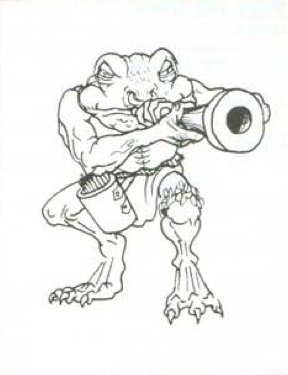
The Slann: Aeons ago, long before the reckoning of man, the world was presided over by a highly advanced race known as the Slann. These amphibian custodians came from the stars to refashion the planet for reasons now consigned to the oblivion, although the rare remaining tablets buried in the steamy jungles of Lustria tell fragments of that story. When the batrachian spacefarers originally discovered the roughly geoid earth, they encountered a developed civilization of lizard people, which they subsequently drove underground with overwhelming firepower and technological superiority. The Slann then used magnetic tethers to pull the world closer to the sun, anchoring it with dual warp-gates, black holes torn into the firmament, over each polar region. With the terrain now inhospitable to previous life, the new stewards set about a program of atmospheric reform and geographic rebalancing, following a model they had employed throughout the thousandfold star systems glittering in the night sky. Here, the Slann developed myriad races and species for research or maintenance work. When their star empire finally fell with the complete collapse of the warp-gate network, the Slann on this world were developing several extremely powerful and dangerous projects. A millennia after their arrival, the catastrophic downfall of the Slann was to stem from a problem long appreciated by their sages, but one which they were eventually unable to overcome—while their interstellar network depended on the chaotic dimension of the warp, the alternate realm inexplicably harbored some formless intelligence, which proved more malignant as its power was probed. After the event, remaining Slann settlers quickly descended into barbarism, striking unspeakable bargains with the malevolent psyches that spilled forth from the polar gates. Retreating to their laboratories in the southern jungle continent, the once vaunted race of spacefarers soon lost mastery and even memory of their fabled technologies, which were left to rust and rot in the humid climes. Today, servitor races of slave eunuchs and genetically-engineered all-female Amazons continue to work menial tasks and tend to the forgotten instruments, while client tribes of Pygmies and tribute legions of Lizardmen now fill the ranks of the opulent and fattened descendants of the Slann. Although their primitivism and barbarism has reduced the Slann to pre-metallurgy armaments, the core of their war parties are made up of a dizzying array of fearsome shock warriors drawn from the Slann braves of satellite villages in thrall to the nearby city-state. These vassal warriors include the formidable Bull Slann Riders, mounted on bloodthirsty Cold One reptiles, as well as the frenzied Warrior Priests, devoted to the mystical deities worshipped by the superstitious Slann. Auxiliary regiments are pressed into service from the lesser savage tribes from the deepest parts of the jungle, serving as skirmishing missile troops, scouts and levy fodder alongside lobotomized human eunuch slaves, tamed troglodytes and Lizardmen tribute warriors. While the Slann lack artillery, they can call on Slann animal handlers driving dangerous jungle creatures forward into combat and consecrated War Altars replete with the fetishes and burning incense of the city-state deities. Slann armies have excellent access to skirmishers from the more barbaric tribes of the inner jungle and can call on Pygmy allies as well. Due to countless blood-stained centuries of sacrifices and dark bargains with Chaos daemons, as well as the remnants of their technocratic history, the Slann have unlimited access to magic, which they can further employ to bind hosts of jungle monsters to their will.

Undead: From forgotten crypts and forlorn mausoleums, the history of the civilizations of the world is ancient indeed. Now lost to time, countless societies rose and fell in the wilderness throughout the long and listless ages of man and more unspeakable creatures, taking with them all of their secrets and revelations. For those ambitious and reckless few, these moldering ossuaries are treasure troves of powerful lore, concealing the answer to the oldest predicament known to humankind—death. Many necromancers thus start down their path of destruction innocently enough, drawn to a misunderstood formula scrawled in the corners of an incomplete magical text or nagging suspicions about a master sorcerer's unfinished work. The result is often much the same, however—a kind of withered undeath in the disemboweled husk of a liche with little memory or love for the life it once knew. When they march forth from their sunken sepulchers to punish the living, Undead armies are headed by powerful wizards who have mastered the necromantic arts, whether Necromancers, Liches or Vampires. While the mindless, rotting legions must remain close to these sorcerers, more independent units can be lead by the spectres of fallen heroes, raised to once more haunt the battlefield. While all of these soulless corpses are immune to human fear and other frailties, the ever-tenuous hold of magic over their animated bones can be disrupted by defeat in combat, causing unpredictable results ranging from the return of more living dead to a complete collapse of the magical fabric that binds them. As Undead armies are raised slowly and painstakingly from the necropolises of forgotten civilizations beyond the frontier, the bulk of these foul legions are typically ancient skeletons, who ride into battle on skeletal steeds or creaking chariots, or might march as a phalanx bristling with spears, great weapons or armed with bows, crossbows and arquebuses. Common rabble is made up of cowardly Ghouls as well as Zombies who, with a faint glimmer of memories still whirling in their rotting brains, can be forced into a rout if threatened by the press of steel. Flammable mummies make up the core of the Undead heavy infantry, while giant Carrion birds cloak the sun and undead catapults pelt the enemy position. At the center of these undead hordes is invariably the Plague Cart, slowly plodding across the battlefield and sowing fear in the enemy while bolstering the threads of magic that hold the rotting army together. On occasion, allied contingents of Chaos or Dark Elves might be seen marching alongside the armies of the Undead, while hosts of monsters or spectres may be enthralled by the more powerful necromancers.

Friday, February 1, 2013

The Grande Review, Part III

(See also Part I, II and IV)

Chaos: For as long as there have been human settlements in the Old World, the North has been known as a dark and blighted wasteland, doomed under the pall of an insidious madness that originates somewhere deep in the northern interior. While the barren steppe is peopleless and empty—punctuated only by wild heaths, insurmountable morasses and the occasional inexplicable and alien cairns—this strange and foreboding wilderness produces a powerful allure for a few. Imperceptible to the vast majority of civilized people, this siren call nevertheless draws a steady stream of dream-tortured mortals from every walk of life, who abandon hearth and home for manic doom as they slip into greater psychosis. Nothing awaits these lost pilgrims. As they travel further north, the barriers of reality break down and they are confronted by impossible terrain and eventually the ebb and flow of pure chaos itself (the
radiation from which would reduce a deranged cultist to component atoms). At times when these reaches swell with the outpour of chaos, a deluge of unformed matter and intelligence permeates the North and drives the solitary mad denizens back south into settled lands. These insane reavers, blessed and crippled with mutations from the Stygian radiance of Chaos, reap a manic harvest of death before stalking back into shadowy Chaos lands. The forces of Chaos could not be thought of as an army in the traditional sense. They have no hordes of fighters, but rather are made up of small bands of champions and anti-heroes, each as powerful or more so than the leaders and heroes of the mortal races. The lower levels of Chaos characters make up the rank and file of heavy shock infantry and cavalry, and are gargantuan knights encased in thick plate armour and bristling with chaotic mutations. Lower
level initiates are made up of thugs, manic brawlers who have not yet guessed their fate. These thewy gangers sport brightly dyed mohawks, pistols and chains, and are the only fighters in Chaos warbands to have no more than a single Wound. Chaos warriors can be joined by the mutated Trolls that wander the outskirts of human lands, as well as by the beastmen and bloodthirsty minotaurs that stalk the woods of the Empire, performing profane rites eerily close to human settlements. Beastmasters can drive the chaos-mutated creatures of the wastes into war and warbands also often build grisly war altars out of the trophies of fallen foes. Being imbued with the raw stuff of Chaos itself, Chaos Wizards have limitless access to every form of sorcery, which also assists them in binding ethereal hosts and chaotic monstrosities. Among their dependable allies, Chaos generals can call on other chaotic warbands, Skaven, Dark Elves, Undead and Orcs and Goblins. With their plunder, they can also recruit mercenaries from the Giants, Hobgoblins, Ogres, Half Orcs and Orcs. While Chaos warbands lack strong missile and artillery support, their powerful infantry and cavalry can strike hard and wade through lesser combatants with grisly ease.

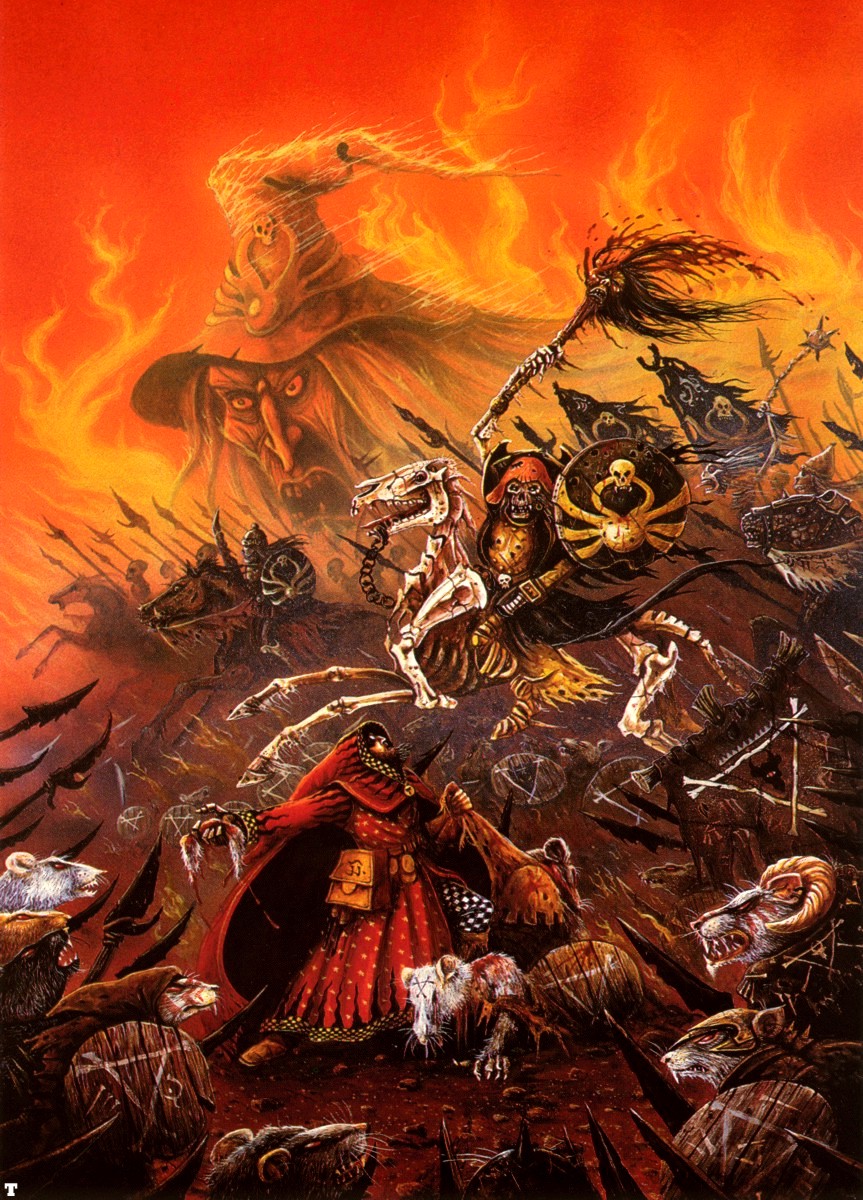
Skaven: In the early Renaissance age of the Old World, the meek and loathsome rat plays an important role. The flea-ridden rodents infest the growing cities, stealing food, carrying deadly plagues and chewing through building foundations to the point of collapse. They are also useful, either as implements of torture in the dungeon oubliettes of the powerful, or as emergency victuals for mariners lost at sea. As humanity begins to spread her arms: there too are lowly rats to be found under her shadow. Few would suspect, however, how important a role these ignoble creatures have yet to play in human history, for deep under the cities and roadworks of civilization, in the forlorn and half-collapsed passageways of the forgotten Dwarf empire of old, dangerous warpstone has spawned hideous rat beastmen. There, in the twilit gloom, these creatures–half-man and half-rat—have been tirelessly working, digging and expanding the tunnels of the underworld, and preparing for an inevitable day when they will rise like an
eschatological wave crashing over the doomed bulwarks of humanity. For now, however, the ratmen marshal their forces and gather the poisonous warpstone that powers their magic and machinery of war. The core of any Skaven army are the Clanrats of the numberless Warlord Clans, from the battle-scarred Stormvermin to the veteran Black Skaven and the common warriors. These light infantry swarm their foes in hordes, and are fast moving and quick to strike, but cowardly when the fight turns against them. Their ranks are further swelled by slave levies: ratmen and even above worlder prisoners captured in war, only to live out a bleak existence underground where the best hope is for a quick death in battle. Some of the more powerful clans have developed their own specialties as well, including Clan Eshin with its deadly scouts and assassins, Clan Pestilens with its blighted Plague Monks, Clan Moulder with its horrible monstrous creations, and Clan Skyre with its mastery over warpstone sorcery and technology. Although they lack artillery and missile troops, Clan Skyre Jezzailachis (large calibre warplock muskets) and warp-fire throwers (which hurl irradiated Chaos flames) provide powerful support to the ratmen hordes. The Skaven's service to Chaos grants them some access to Chaos magics as well as the ability to bind monstrous and chaotic hosts, but Chaos' touch has also mutated the Skaven throngs. When they break the surface to scourge the cities and towns of humanity, Skaven may call upon Orcs and Goblins, Dark Elves and Chaos allies.

Orcs & Goblins: Issuing forth from from the most forbidding mountain tops and impenetrable forests is the single most devastating natural force known to the Old World. While humanity is certainly pressed by calculating foes from without and corruption and incompetence from within, it is rather the disordered hordes of Orcs and Goblins—scattered in dens throughout the Old World—which regularly threatens humankind with near extinction. Collectively known as "Greenskins," these loathsome creatures descend in uncontrollable mobs from their lairs each year to fight not for conquest or religion, but simply to fight, as it is in their bloody humour to endlessly scrap and brawl. Greenskins are not particularly bright or longsighted, and when the enemy is not readily at hand, a gang from one tribe will quickly set about another until the entire warband is caught up in the fray. When
Orcs and Goblins do organize, usually under an exceptionally large and violent specimen of the species, fear and intimidation ranks a deeply hierarchical tribal structure—roughly organized by size, according to who could eat whom. When this happens, Greenskins are at their most dangerous, as they are able to accomplish short and violent campaigns into civilized lands before disorder and significant human sacrifice is able to break the tidal wave and send the scattered brutes wandering back to the deep and dark wilderness. Such an event, known as a "Waaargh!", is a devastating affair, as Orcs torch all structures and eat all prisoners and bystanders after battles in a massive feast, while the more deviously cunning Goblins delight in torturing captured souls or sacrificing them to unspeakable deities. While Greenskins swarm vast pits deep below Old World mountains or high at
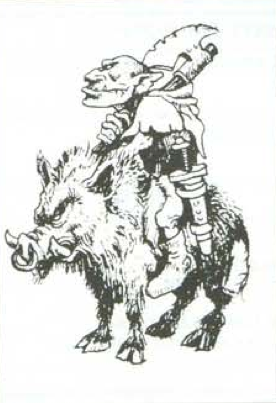
their snowy summits, their main strongholds are in the Dark Lands, over the World's Edge Mountains, where they gather in such number that some philosophers speculate that the race's origins must be somewhere there to be found. Because of the sheer diversity of the race, Orc & Goblin armies can call upon a great range of warriors. The core of most warbands is made up of hardy Orc fighters, who ride boars as medium shock cavalry, drive chariots or march into battle as medium infantry and archers. The strongest Orcs are the elite "Big Uns," whose size indicates their experience (it is not known if Orcs ever stop growing, although most live a life short and brutal enough to make the question largely academic). Goblin raiders sweep across the battlefield on nearly-tamed war wolves and wolf-drawn chariots, while larger hordes of Goblin foot bring spears and bows to
overwhelm the enemy with sheer numbers. Dangerous Goblin Fanatics, lunatic ball-and-chain swinging cultists hopped up on psychoactive brews, are hidden in some ranks of Goblins, only to be released with calamitous effect when the enemy draws near. Primitive Savage Orcs lack all but the crudest of weaponry, but make up for this by working themselves into a wild frenzy, while elite squads of highly-disciplined Black Orcs march out from the Dark Lands to whip their lesser cousins into fighting form. Orc & Goblin armies are further bolstered by scorned Half-Orcs, who are treated as inferior half-breeds by the other Greenskins, miniature Snotling runts and bands of Trolls, lured by the promise of dining on human-flesh. When the battle is brought to the human stronghold, Orc & Goblin generals make use of all manner of war machine to bring down the fortress walls, including Snotling Pump Wagons (a sort of chariot and ram), pilfered organ guns, "spear chukkas" (a type of ballista) and three calibers of stone throwers. While Orc & Goblin commanders try to maintain rank and file amongst their unruly army, archers and Goblins are sometimes allowed to adopt loose skirmish formation, particularly when they are seen as expendable or less important than the melee regiments. Due to their closer dealings with the dark arts, Goblin Shamans have better access to the different spheres of magic, and particularly to Daemonic sorcery, while Orc Shamans dabble enough to know only a few of the secrets. Orc & Goblin wizards can bind monstrous hosts from nearby their wild hideaways and Greenskin generals can summon the support of Fimir, Skaven and Chaos allies, as well as Giants, Ogres, Half Orcs, Orcs and Hobgoblin mercenaries.

Our final article will discuss the remaining armies of the Dwarfs, the Slann and the Undead.

LinkWithin

Related Posts Plugin for WordPress, Blogger...