Monday, May 28, 2012

Cosmic Alignment

John (of Thistledown Post) put up an interesting discussion on alignment in the DCC RPG. As he relates...

"The system of alignment in the DCC RPG is one that reflects its old-school heritage... Law is given as the choice of those who would uphold society's system of order and rules, producing the common good. Chaos is all about over-throwing authority, exercising personal power, and self-serving ends. The middle ground is Neutrality, the choice of those who choose not to decide, (hmmm...sounds like a famous Rush song of which I'm fond.)"

It is interesting that DCC specifically chooses not to equate Law with "good" and Chaos with "evil." Point in fact, the DCC RPG core book describes bugbears, goblins, hobgoblins, and troglodytes as being Lawful, and thus vulnerable to be Turned by chaotic Clerics. It is undoubtedly surprising to some that such traditionally evil creatures would be categorically Lawful in alignment, until you consider that there may be multiple axes that the struggles of the "urth" orbit around. Morality and Order are two such axes that do not necessarily always converge, as they have their own alien interests and objectives. Rather than seen as a graph or chart, perhaps aligning morality with order is better seen as a complex gyroscope, where good and evil is one ring and law and order are another (where even further alignments, include political, planar and magical could be included).

Certainly, neither pole of order (Law or Chaos) apparently comports itself to morality. As John describes:

"In my campaign, Law and Chaos will be struggling for dominance. Either potential outcome will not be good for the mortal folks of the world. If Law wins, the world become stagnant and unmoving. If Chaos wins, the world becomes a place of ever-changing pain and torment."

As the sun burns away and the old stars draw ever closer, ethics are increasingly merely short term sources of guidance. In truth, the dominion of either Law or Chaos will have an ultimately tyranical effect that will blot out all life. Law will crush its own people under heel, or simply allow them to die out and fade away in a perfect utopia, doomed by entropy like Tolkien's elves. Chaos will turn the world over into rioting and ruin. Neutral forces are aligned to the very passage of time itself, and seek either to prolong the titanic struggle that lays waste to the urth as long as possible before the imminent and inevitable end, or are entirely uninterested in the world's fate and worship the very fatality of it all. Dread Cthulhu, who would mindlesly tear the urth to pieces like a wet paper towel were he ever to turn over in his sleep, is notably Neutral in the DCC RPG book.

What I like here is that morality is something that veils the perhaps less obvious, but in the long term more dire, conflict. Morality concerns itself with the present, contingent and earthly situation, and represents an entirely different axis that intersects at times with Law and Chaos, which are more cosmic in origin. Ultimately, it is the ancient struggle between the latter forces, however, that march the world ever closer to inexorable collapse.

Here, the world is never to be saved, and the downfall is more or less inevitable. The urth is doomed, and stands in the shadows of a late age where the powers of order have long since committed to mutually assured destruction. This long tide from the deep oceans of the cosmos is drawing in upon the tiny urth, and will wash over its edifices and civilizations.

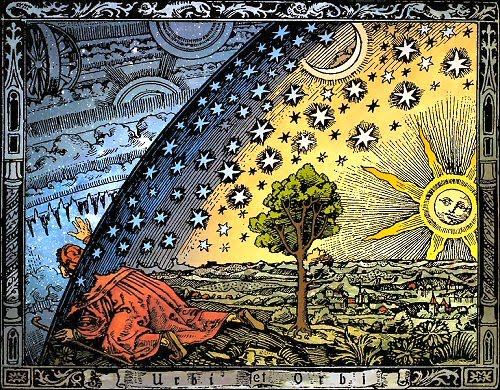
We can start to see a convergence between the concept of different planes of existence and the different interpretations of alignment (which has been, at times, a stand in for morality, psychology, planar politics or societal disposition). In the ancient mind, the world was seen as flat and the cosmos extended above it, with each heavenly body moving in perfect circles above (an attempt to understand why the same star would occupy a different part of the sky at different times of the year). What if these cosmic rotations of the empyrean were the wheels of countless irreconcilable alignments and orders, each arrayed against each other and against the terrestial surface in complex webs of machinations, alliances and feuds. Only when the different forces arrayed against the urth had come into perfect balance, and these stars were in perfectly aligned, would true Neutrality reign and draw forth the old ones. At last, the stars are right.

Appendix A: Alternate Alignments
I find it is important to move alignments away from Platonic absolutes. In the Warhammer setting, the human psyche itself makes an impression on the metaphysical, and massed human emotions and thought can empower or even create entities in the raw chaos of the beyond. When you stare into the void, sometimes the void stares back. Here are d24 alternate alignments to drop into your campaign.

1 Psychological (from the village's deep-seated fears)
2 Chemical
3 Radiation (from the nearby nebula)
4 Planar
5 Linguistic (from the dead language recovered by the scribe)
6 Magnetic
7 Musical (from the mindless cacophony echoing in the deep)
8 Ethical
9 Elemental
10 Rhetorical (from an argument long forgotten)
11 Temporal (pouring forth from the black hole)
12 Cultural
13 Political (of the local petty barons)
14 Familial
15 Artistic (of the last masterpiece of the legendary painter)
16 Energy
17 Ancestral (from the forefathers that look down upon their tribesmen)
18 Philosophical
19 Moral
20 Gravitic
21 Mechanical
22 Mythic
23 Poetic
24 Organic (from the puddle of mossy slime by the roadside)

Thursday, May 24, 2012

Review: Sailors of the Starless Sea

Sailors of the Starless Sea is the first adventure module available for purchase after the release of the Dungeon Crawl Classics Roleplaying Game. Starless Sea is meant to be an introductory adventure (for zero to 1st level characters), which showcases the different style of play promoted by DCC RPG.

The actual printed booklet is thin; only 18 pages, 13 of which comprise the actual text of the adventure (2 more pages are maps, 1 page of handouts, 1 page of full illustration and a 1 page flyer in the back for promoting the game). Noteably, only six of the thirteen pages of the adventure are full text, with the other two thirds of the book being rather lavishly illustrated in the moody style of Stefan Poag, Doug Kovacs, Jim Holloway and Russ Nicholson. This is good for inspiring the Judge and greatly adds to the art-value of the book, but a few of the pictures will be difficult to share with players as they share space with text.

The adventure itself is meant for 10-15 zero level characters, or a slightly smaller number of 1st level characters. For the uninitiatied, Dungeon Crawl Classics campaigns can optionally begin at zero level, where each player rolls up three to four poorly armed and equipped peasants. In a manner reminiscent of Warhammer Fantasy Roleplay, these would-be adventurers face a steep curve of natural selection, leaving only the strongest to advance on to first level after completing the first adventure. Although this method is optional, providing each player with multiple characters does a great job of achieving a number of things. First, it provides a learning curve for new players. Second, it allows you to get multiple chances to roll a great set of Ability Scores without compromising the "3d6 in order" mantra. Third, it adds a little bit of dark humour to the first game, which helps ease players into the campaign before there is a truly meaty plot for the players to sink their teeth into.

Without spoiling the story, the module launches the adventurers right into the action from the start. There is no detailed home base, and the adventure begins at the entrance of the dungeon with the presumption that the adventures will conquer it in a single expedition. Although there are parts that are indeed very deadly, there is a clever way to gain reinforcements during the crawl, and defeating the module in one go is certainly feasible for clever players. This last part is key, as there are monsters in the adventure that are almost certainly unbeatable and must be approached intelligently. There are enough clues on how to handle these "puzzle monsters," but overly brash parties will likely receive little more than a TPK for their trouble. These monsters are obvious and clearly horrifying enough, however, to not allow even the most jaded players to entertain the slightest hope of conventional victory.

The dungeon, an ancient Chaos Fortress, is detailed with intricate, three-dimensional maps that really come to life. Although there are relatively few rooms left in the crumbling pile, they are all varied enough to provide a really robust adventure. This seems to go directly against the OSR megadungeon mantra of "half of the rooms should be empty." Indeed, there is no grid of hallways and square chambers, and each encounter section of the fortress is its own mini-adventure, with excellent ambience, a unique story to tell and different challenges for the players. Its hard to esteem the maps enough, and Doug Kovacs has done an excellent job interplaying art and cartography to paint a vivid terrain in the reader's mind.

Like the encounter environs, each lurking monster is unique, with no recognizable enemies to be seen (I believe this may be one of Joseph Goodman's design goals with DCC RPG). The treasure is also novel and original, with no +1 short swords to be found. Each artefact comes with a history of who owned it previously and a description of what dangers lie in possessing such a powerful relic. Some treasure will be evident to the players, but inaccessible until they advance in power, meaning that the party may have to return to the fortress later on to secure these prizes (which is a nice touch, suggesting a "Return to the Starless Sea" session down the road).

The action in the module can only be described as high-octane. Unlike a normal low-level adventure where the players are stuck rescuing the local merchant from goblins, Starless Sea throws beginning adventurers into what feel like major events. Instead of relying on their ability (indeed, zero level characters have little), players must defeat high-level challenges with their wits (the puzzle monsters mentioned earlier being just one example of this). The end of the adventure leaves the players feeling that they have achieved larger than life things, although at a terrible cost, and creates an exciting opening for further adventure as the heroes are born away on perhaps the greatest prize and namesake of the module. There is also plenty of opportunites to draw long-term villains from the adventure, making the module a decent foundation for a larger plot.

For a dusty shelf price of $9.99 for the dead tree version ($6.99 for the PDF), and considering the amount of art in this module, it is hard to pass this by. The stats are generic enough to run the adventure with any OSR game, and (with a little editting for gore) Sailors of the Starless Sea would be an exciting introductory adventure for new players of any age. It is best used, however, to introduce players to DCC RPG, as (much like that tome) the contents are a very evocative old-school primer on how to bring that 1970's heavy metal ballad feel back to your gaming table.

Wednesday, May 2, 2012

Magic in Questers

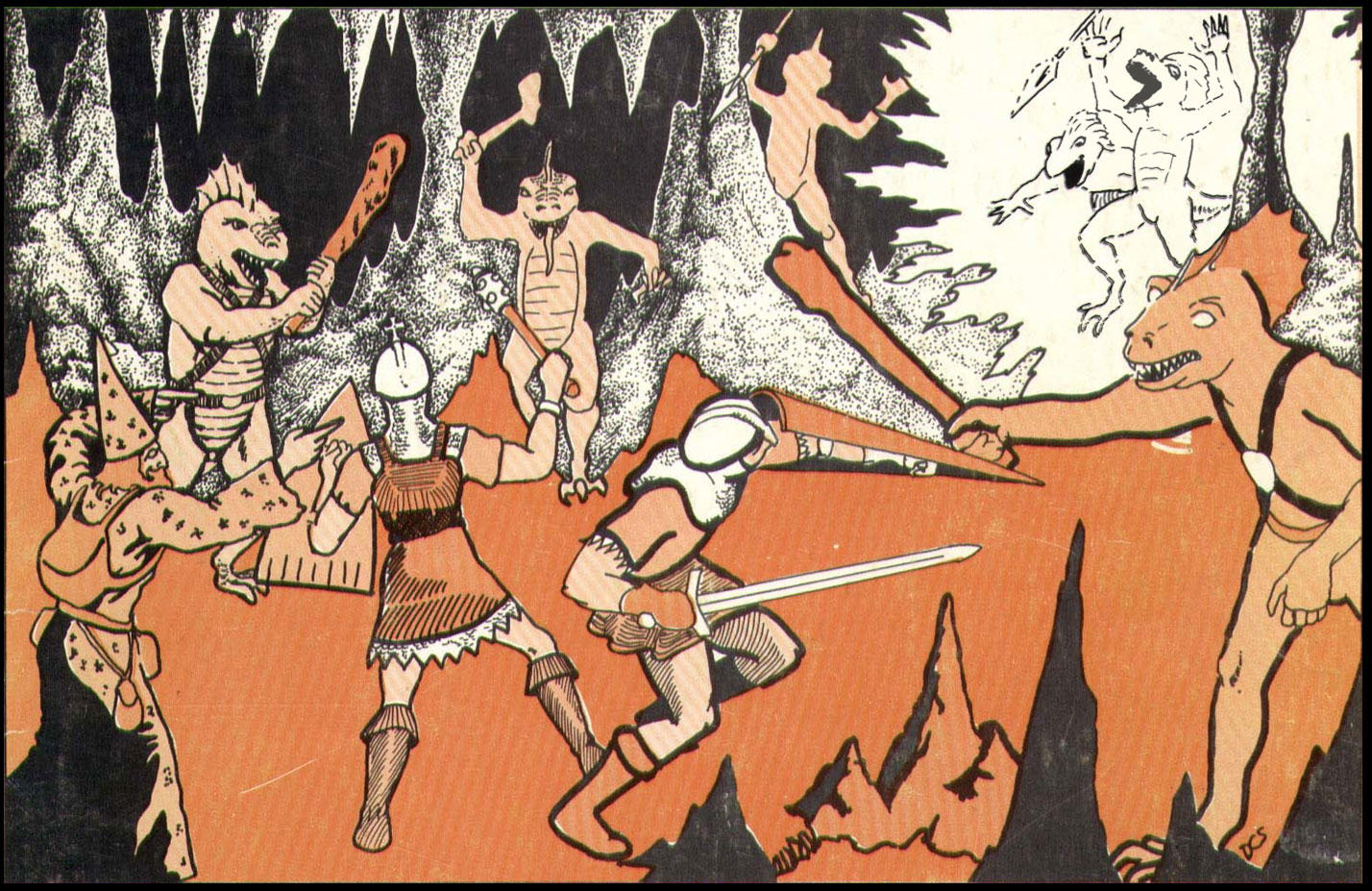
I admit, I have always liked the way David C. Sutherland III drew a magic-user. Pointy hats, stars, long beard... I really can't imagine it being any different. Flipping through the excellent and classic Sutherland and Trampier art of the late 1970's Dungeons & Dragons, I find a cohesive design sense and style that readily inspires one to adventure. The almost ligne claire method of "DCS," and the very human proportions of his figures, in particular perfectly reflects the style of the J. Eric Holmes edition of Dungeons & Dragons, by giving you the basic outline and letting you fill the details in with your imagination.

I own a copy of the Holmes edition, and I am quite fond of it, but never seriously gave thought to running it. Holmes is sort of a messy proto-AD&D, which is great for people who want a game that is not cut and dried, but who cannot stomach the complexity of AD&D. Both of these descriptions match my style perfectly, but Holmes has the same problem for me that the original game has without Chainmail—the d20 combat rules, which produce absurdly high mortality rates.

Recently, however, the Holmesian artwork and Nicolas Dessaux's excellent Searchers of the Unknown have inspired me to take another look at a rough and tumble, rules-light way to play in the sandbox created by Sutherland and Trampier. My version of Searchers, which I am now calling Questers into the Unknown in homage to a HackMaster module, is quickly becoming a favorite game of mine. As one of my dear readers noticed, however, there is no magic system. This is largely intentional, of course, as I think any referee worth his salt can improvise the effects of a spell just based on the title of the spell (thus, keeping magic magical). Characters were meant to collect magic items (potions, wands, staves, scrolls, spell books) and spend them at their leisure, effectively making every character a magic-user (in the same way that, before Greyhawk, every character was a thief). But that still did not account for the fact that there were no pointy-hatted, long-bearded old men walking around in Questers. If I wanted to be true to the implied world of Holmesian art and fiction, I would need to account for this.

And so, here are the extremely optional rules for magic in Questers into the Unknown:

Spellcasting
While potions and wands have limited use, magical scrolls work slightly differently. When a hero tries to cast from a scroll, roll 1d10 against his armour class for the somatic element of the ritual. If the roll is equal or less, the scroll is cast successfully and may be cast again in the future. If the roll is higher, the scroll is destroyed, the magician visibly ages and he permanently loses 1 hit point (which may not be restored). Heroes may cast a number of spell scrolls a turn equal to their level (Hit Dice).

Thus, like everything in Questers, you are not bound by hard categories or numbers, but rather the development of the character is completely up to choice. Characters that are predominately spell casters will be lower hit points, older and not wear armour (and they will need a train of henchmen to carry all of their wands, staves, spell books, scrolls, potions etc). There is also room for a Gray Mouser-like thief, wearing light armour and casting a spell now and then. There is a simple spell burn mechanic to discourage overusing spells (especially for heavily armoured characters), but a dedicated magician can still turn on the fireworks and explode handfuls of spells in a single round of combat.

Monday, April 30, 2012

Warhammer Fantasy Roleplay

Looking back, I am coming more and more to admire Warhammer Fantasy Roleplay, and I am grateful for having a nearly compete collection of the second edition. I came a little too late in the game to get into the first edition (although I do own it, and the major campaign arc The Enemy Within), but I found the second edition to be an excellent game. I think that version was incredibly conscious of the third edition of Dungeons & Dragons, which was admittedly the three hundred pound gorilla in the 10'x10' room in 2005. The result is a game that parallels the competition in clarity and internal symmetry, but one that takes an entirely different path in terms of player power and goals. Sure, WFRP characters do become more powerful, but not particularly offensively (as D&D characters might), but rather defensively. WFRP characters become more scarred, thick-skinned and tougher through their travails. The goal of a WFRP character is not power. It is that faint glimmer of hope: that drive to survive the short and brutal affair that is medieval life in the Old World. It is a seemingly small difference, but it makes a fantastic contrast from the Dungeons & Dragons experience.

And, for your entertainment, here is an illustrative example of the same scenario being played out in each game:

Dungeons & Dragons
The players hear of an old barrow tomb in the mountains above town. They trek up to it the next day, disarm their way past traps, fight through rooms of skeletons and ghouls and pry open the sarcophagus. They grab the coins, treasure and magic sword inside, but not before the remains rise to attack them as a lich. They lose a henchmen in the fight and go back to town victorious, throwing a party with the villagers.

Warhammer Fantasy Roleplay
The players hear of an old barrow tomb in the mountains above town. They trek up to it the next day and find the old tomb half-buried in earth and vines. They find the chamber sad and empty, and pry open the lid to reveal the remains of an ancient barbarian queen and her child. Overcoming any moral qualms, they grab the only item of apparent value (a deteriorated ancient necklace) and shuffle back to town. Unable to find an interested buyer, and worried the jewelry might be cursed, the players toss the necklace into the town well and go back to the inn. That night, a banshee appears in town and leaves a wake of murdered children. The locals gather into an uncontrolled mob to find the culprit, but accidentally chance upon the midnight rituals of a local cabal of cultists (including the mayor's secretary and the local baker—come to think of it, his Monday meat pies did taste a little strange...). The mob breaks out into a full scale riot, half the town burns down and the players are rounded up the next day, tried as witches and hanged.

Friday, April 27, 2012

My Variant of Searchers of the Unknown

Like the regular Searchers of the Unknown, but faster paced, so that you can start the first session in Quasqueton and be in Erelhei-Cinlu by the fifth!

Build PCs
Roll 1d3. Create that many PCs.

1) Choose an armour
No Armour (AC 9)
Leather armour (AC7)
Chainmail (AC5)

Plate mail (AC 3)
(Shields reduce AC further by -1)


2) Roll for hit points
1d8 per level (HD). So, 1d8 for a PC starting at level 1.

3) Choose three weapons, or two weapons and a shield
Small weapon (d4 damage, dagger or sling)
Ranged weapon (d6, bow or crossbow)
Melee weapon (d8, mace or sword)
2-handed weapon (d10, greatsword or polearm)


4) Choose a name and a description
Choose a race, like human, dwarf, hobbit or elf (it has no rules effect, but it adds to the fun in the game). Imagine what he was before becoming an adventurer. Your PC is ready.

Example of a character sheet: Eustace the Useless (AC 5, HD 3, hp 14, Dmg 1d10 with voulge).

Fighting
1) Initiative: Each one rolls 1d10+his AC. The best score has initiative, then each one attack in descending order. So a lighter fighter has better chances to strike first.

2) Movement: Your movement rate equals your AC in tens of feet (indoors) and tens of yards (outdoors).

3) Attack: roll 2d6. If the score is under your opponent AC + your own level, it's a hit. If the score is equal to or less than your level, you may attack again.

4) Damage: When you hit an opponent, roll the damage (Dmg) dice. Deduces the result from your opponents hit points (hp). At or below 0, monsters are dead, and PC's are knocked out. Monsters could kill them easily, but they won't. Instead, they keep them as prisoners. This is just more pulp-like.

5) Rest and bandages: After that, all hit points (hp) are restored back their initial score. After all, hit points reflect the capacity to escape or stand hits. If a PC has been sent below 0hp, he may needs a longer rest, or even healing magic like a potion of healing), because he’s wounded.

Experience
PC's gain 1 experience point for amusing the referee. After defeating monsters, each PC gains experience points equal to the highest single monster's HD minus their own level. A new level is gained when they accumulate experience points equal to the square of the next level (4xp for Level 2, 9xp for Level 3 etc).

Based off of Nicolas Dessaux's Searchers of the Unknown.

Wednesday, April 25, 2012

Dungeon Mono-Tables

Inspired by Jeff's vertical geomorph Castle Dundagel (an idea I have also been thinking of lately) and the Dungeon Crawl Classics Roleplaying Game, I have sketched out some mono-tables for random dungeon encounters. Similar to the critical hit charts in DCC, simply roll on the encounter table with a die type determined by the dungeon level being explored. These levels are as follows:

Wilderness ~ Roll 1d6. The wilderness is 83% empty.
Environs ~ Roll 1d7. The environs are ruled by bandits, 71% empty.
Ruins ~ Roll 1d8. The ruins are contended ground, 62% empty.
Level I ~ Roll 1d10. Level I is contended ground, 10% treasure, 10% traps, 50% empty.
Level II ~ Roll 1d12. Level II is ruled by humanoids, 8.3% treasure, 8.3% traps, 41% empty.
Level III ~ Roll 1d14. Level III is ruled by the undead, 14% treasure, 7% traps, 33% empty.
Level IV ~ Roll 1d16. Level IV is ruled by the undead, 12% treasure, 12% traps, 31% empty.
Level V ~ Roll 1d20. Level V is ruled by the giants, 15% treasure, 10% traps, 30% empty.
Level VI ~ Roll 1d24. Level VI is ruled by the dragon, 16% treasure, 13% traps, 29% empty.
Level VII ~ Roll 1d30. Level VII is ruled by demons, 16% treasure and 13% traps, 23% empty.

Encounter Table
1-5 No Encounter
6 Monster
7 Bandits
8 Humanoids + Roll Again
9 Treasure + Roll Again
10 Trap
11 Humanoids
12 Monster
13 Undead
14 Treasure + Roll Again
15 Undead
16 Trap
17 No Encounter
18 Treasure + Roll Again
19-20 Humanoids + Roll Again
21 No Encounter
22 Treasure
23 Trap + Roll Again
24 Dragon
25 Undead
26 Trap
27 Treasure + Roll Again
28 Demon + Roll Again
29+ Demon

When an encounter is indicated, simply roll the same level die on the specific encounter table. I've left the tables for Treasures, Bandits and Demons open for the judge to design. Unlike the other tables, they should be unique, with entries crossed off after they are rolled, signaling the party's progress through the dungeon. The dragon doesn't have a table, as there is only one dragon (although an extra table might indicate if he is sleeping or not).

Traps
1 Alarm (roll on humanoid)
2 Net Trap
3 Bear Trap
4-5 Spear Trap
6 Collapsing Ceiling
7-9 Pit Trap
10 Laughing Gas
11-12 Arrow Trap
13 Crushing Walls
14 Sleep Gas
15 Pit Trap full of (roll on undead)
16-17 Poisoned Darts
18-19 Pit Trap full of water
20-23 Spiked Pit Trap
24-25 Poison Gas
26-27 Spiked Crushing Walls
28-29 Cave-in
30 Dimensional Door

Humanoids
1-3 Kobolds
4-5 Goblins
6 Gnoles
7 Bugbears
8-10 Orcs
11 Orcs + Roll Again
12 Half-Ogres
13 Cavemen
14-15 Ogres
16 Ogre Magi + Roll Again
17-19 Cave Giants
20 Giant King + Roll Again
21-24 Trolls
25-26 Duergar
27 Drow
28 Cyclops
29 Roll twice more, first roll are slaves of second roll
30 Ancient Alien

Monster
1 Giant Boar
2 Wolves
3 Bear
4-5 Rat swarms
6 Giant centipedes
7 Giant rats
8 The Owlbear
9 Stirges
10 Green Slime
11-12 Stirges
13 Gelatinous Cube
14 Yellow mold
15 Giant Centipedes
16 Insect Swarm
17-18 Giant Spiders
19 Cave Bears
20 Giant Lizards
21 Giant Lizards driven by (roll on humanoid)
23 Beholder
24-25 Basilisk
26 Deep Horror eating (roll again)
27 Hydra
28 Black Pudding
29 Giant Cobra
30 Titanic Worm

Undead
1-3 Ghouls
4-8 Zombies
9-12 Skeletons
13 Carrion Crawler
14-15 Wights
16 Lich
17 Wights
18 Plague Zombies
19-21 Zombified... (roll on humanoid)
22 Ghost
23 Vampire
24-25 Wraith
26 Banshee
27 Zombified... (roll on humanoid)
29 Undead Wyvern
30 Giant Skeleton

VoilĂ , one complete dungeon! Let me know what you roll up.

Tuesday, April 24, 2012

Summoning All Readers

So! I've been thinking again of changing the format of this blog. Life, inexorable creature that it is, has once again imposed its will upon me, and I won't have all the free time to write long articles as I previously had. My original goal with this blog was an online repository of articles from my own, developing thinking on game theory and design. I meant for every article to be excellent, or at least useful, and to be written entirely at my own pace. The layout of the website was meant to have minimal distraction to focus the reader on the text. To be honest, I never really expected to have a readership, and thus I never really wrote my articles with the reader in mind.

Now then, dear reader,what do you think? I am considering switching to a more stream-of-conscious approach (closer to the Gameblog than Grognardia). Shorter articles, more to the point, more comfortable style. I also may end up starting a new blog, so as to preserve this one. Please do provide your feedback and let me know what you think.

LinkWithin

Related Posts Plugin for WordPress, Blogger...